

### Blog Post:
Pet air purifier for allergies is a must-have for many cat and dog owners who want relief from sneezing, itchy eyes, and lingering pet odors. But do these devices work as promised, and what should you watch for before investing? This realistic, research-based guide cuts through hype and helps you choose a pet air purifier that truly fits a multi-pet household.
Key Takeaways
- Air purifiers can reduce airborne pet dander and improve respiratory symptoms but are limited against settled allergens and some gaseous odors.
- True HEPA filtration (99.95–99.97% efficiency) combined with substantial activated carbon offers the best results for dander and odor in pet homes.
- For best results, match purifier size and Clean Air Delivery Rate (CADR) to your room, maintain filters, and combine with regular cleaning and litter management.
- Quick takeaway — Do air purifiers actually help with pet allergies?
- How HEPA and carbon filtration work against pet dander and odors
- Clinical evidence (2023–2024): What studies actually show
- Why purifiers help airborne dander but often miss “settled” dander and litter dust
- How to read specs and pick the right unit for pet households
- Exact differences to look for: “best for pet hair” vs “best for cat litter dust”
- Real-world performance: what tests exist and what they show (and what’s missing)
- Common user complaints and real-world downsides
- Maintenance, ongoing costs, and warranties (what to budget)
- Latest innovations and “pet safe” features (PECO, UV? ozone concerns)
- Side-by-side checklist: what features to prioritize for multi-pet households
- How to test one at home (placement, runtime, measuring results)
- Research gaps buyers should know
- Quick product shortlist criteria + next steps
- FAQ
- Conclusion
Quick takeaway — Do air purifiers actually help with pet allergies?
Yes, a pet air purifier for allergies can help by removing airborne particles like pet dander, hair, and some odors. However, clinical research shows these devices offer only partial relief. According to a 2024 systematic review, air filters may alleviate allergic rhinitis symptoms in pet owners but produce limited impact on medication use, overall quality of life, or peak expiratory flow rate. In real homes, results depend on the purifier’s fit for your space, the filter type, and your cleaning habits. Purifiers are valuable for reducing airborne pet dander and odors, but they’re not a standalone solution — ongoing cleaning and litter management are essential.
How HEPA and carbon filtration work against pet dander and odors
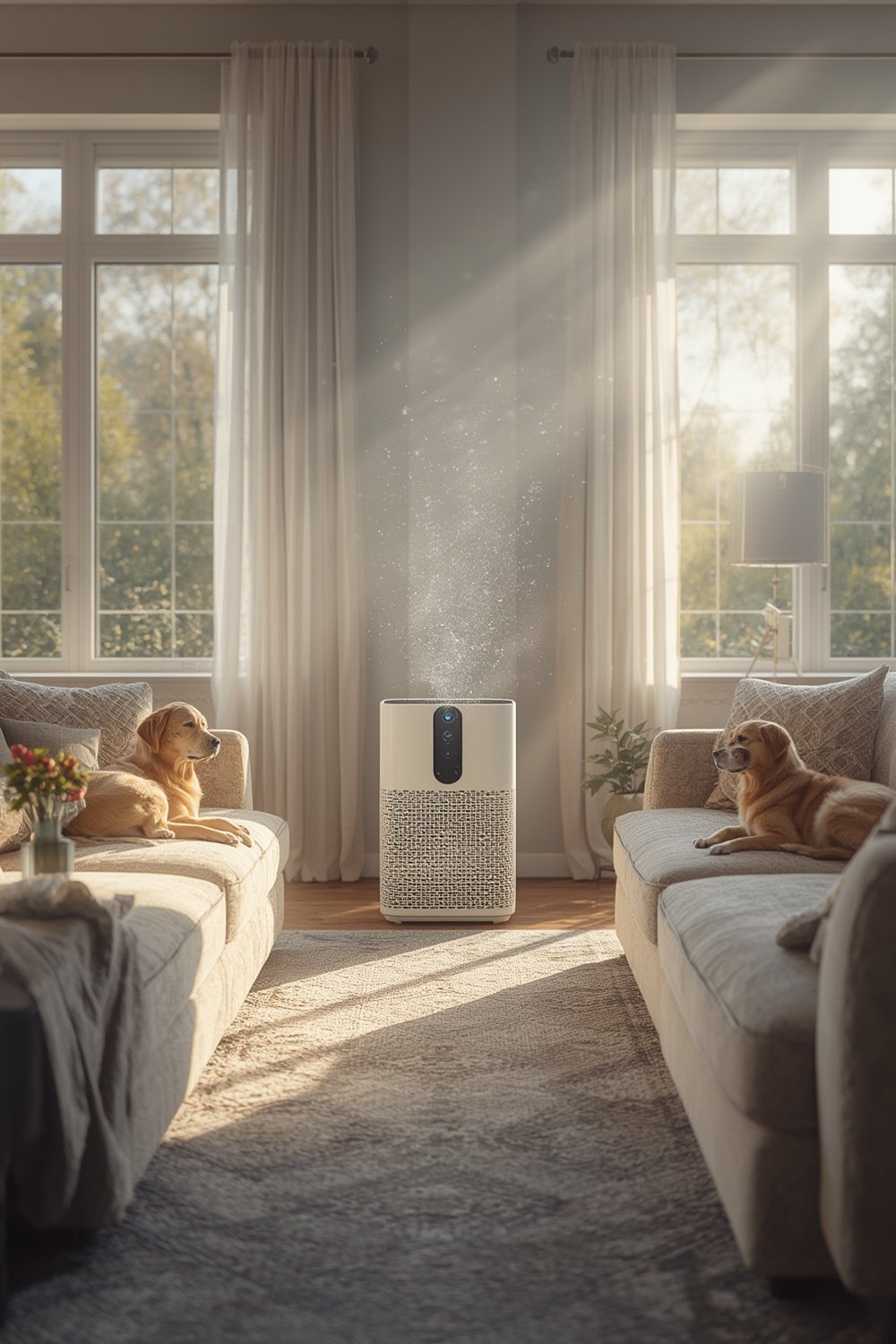
Modern air purifiers for pet dander use true HEPA filters to capture microscopic particles, including cat and dog dander, pollen, and dust. Certified HEPA filters trap 99.97% of particles down to 0.3 microns. Some advanced HEPA designs claim 99.95% efficiency at 0.1 microns—critical since pet dander can be tiny but allergenic. However, HEPA can only trap solids, not gases. That’s where activated carbon comes in: it absorbs volatile organic compounds (VOCs) and pet-related odors—things like urine ammonia and musty litter box smells.
For odor-sensitive or allergy-prone households, always choose an air purifier for odor with BOTH substantial HEPA filtration and at least 0.5 lb (or more) of activated carbon. Combined, they’re suited for the complex mix of pet hair, dander, dust, and odor. For more, see Dyson’s breakdown of HEPA and carbon filtration (source).
Clinical evidence (2023–2024): What studies actually show
Research from 2023–2024 confirms moderate value—filters reduce some allergy and respiratory symptoms in pet households, but don’t offer a silver bullet. The 2024 systematic review cited above found that filters “may alleviate symptoms” but didn’t show meaningful improvements in medication use or measured lung function. The EPA’s review of 8 studies found notable gains in respiratory health, but gaseous pollutant removal was inconsistent. The bottom line: most users won’t see total allergy relief from an air purifier alone, but many see easier breathing and less dust in the air. For full results, pair purification with diligent surface cleaning and litter box hygiene.
Why purifiers help airborne dander but often miss “settled” dander and litter dust
HEPA air purifiers, even high-end ones, only trap particles suspended in the air. When pet dander or litter dust settles onto furniture or floors, the purifier can’t remove it. Much of the allergenic material in homes settles fast and escapes the filter. A review found that airborne PM2.5 levels can drop by more than 50% with a quality purifier, but surface dander remains mostly unaffected (source).
Frequent vacuuming, litter replacement, and damp wiping are essential for full control. Purifier placement also matters: keep it away from walls and at least 3 feet from litter boxes or pet beds. Running your purifier 24/7 at the appropriate speed maximizes air turnover.
How to read specs and pick the right unit for pet households (CADR, ACH, room size, filter stages)
Decoding purifier specs is crucial. Start with Clean Air Delivery Rate (CADR): it measures how much clean air the unit produces, usually broken down by smoke, dust, and pollen. For pet homes, prioritize dust and smoke CADR, since dander and litter dust are similar sizes. As a rule, look for a CADR rating that’s at least two-thirds of your room’s square footage (e.g., a 180 sq. ft. room needs 120+ CADR).
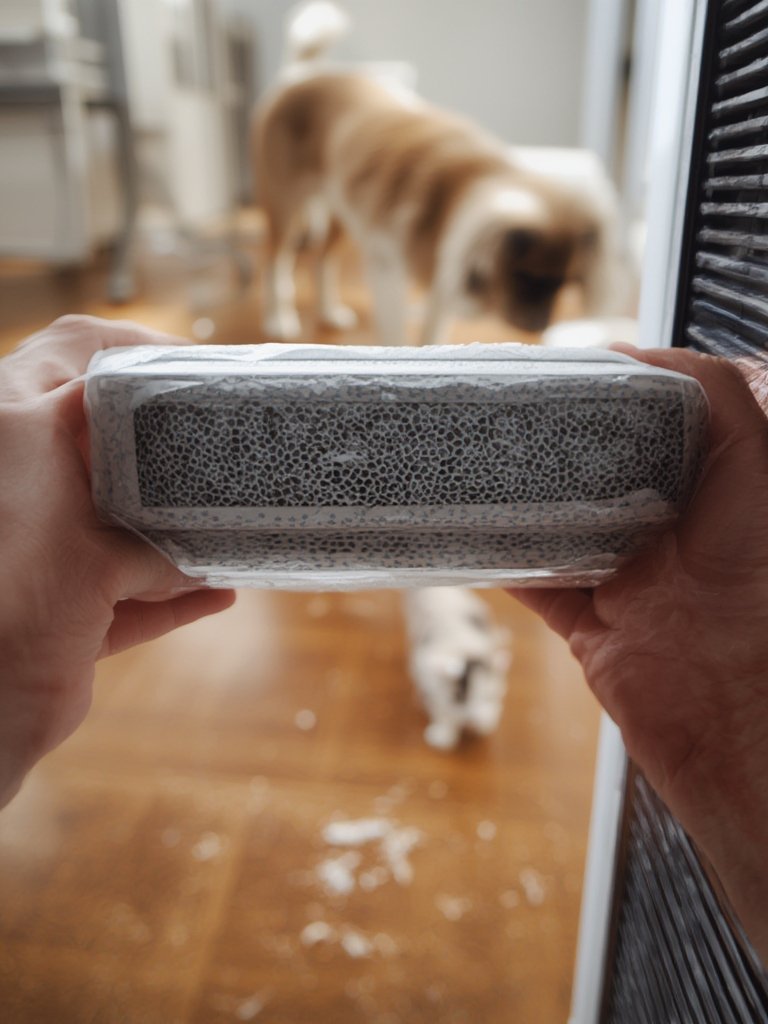
Always choose multi-stage filtration: at minimum, you want a washable pre-filter (catches hair and fur), a true HEPA filter for dander, and a robust activated carbon filter for odor. Avoid “HEPA-like” or non-certified filters. For more tips, Consumer Reports guides are helpful when comparing brands.
Exact differences to look for: “best for pet hair” vs “best for cat litter dust”
The best air purifier for cat litter dust is not always the best for pet hair or fur. Hair and fur are large, easy-to-capture particles; most are caught by a washable pre-filter or coarse mesh. For cat litter dust, look for a purifier with a high fine-dust CADR, true HEPA, and plenty of activated carbon (check the media weight/volume in specs). For targeting urine smells and ammonia, choose models labeled for VOC/gas removal, not just “odor control.”
No 2023–2024 research compared exact model specs, but choose units with separate, easy-access pre-filters, high CADR for dust, and at least 0.5–1 lb activated carbon. For split needs (e.g., litter box in one room, pet beds/fur in another), consider two units, or move a single portable purifier as needed.
Want more tips for keeping litter box smells down? Check out our automatic litter box no smell guide and our low-dust tofu cat litter guide.
Real-world performance: what tests exist and what they show (and what’s missing)
Independent tests measuring PM2.5 and dander show that high-quality air purifiers can cut airborne particulate by over 50%. However, Consumer Reports and other labs do not run multi-pet, odor- plus-dander “real home” scenarios head-to-head in 2023–2024 reviews (see CR data). Manufacturer claims of “total odor removal” rely on idealized lab settings, not litter-heavy homes. Expect noticeable dust and dander reduction, but don’t expect a brand-new-smelling house without parallel cleaning/upkeep. For more, see our dog care tips guide.
Common user complaints and real-world downsides (durability, noise, filter cost, odor reduction)
There’s no centralized complaints database for pet safe air purifier models, but aggregated user reports and manufacturer reviews highlight key pain points:
- Noise at higher speeds: Even top-rated units are noisy on “turbo” settings needed for rapid clean-up.
- filter replacement costs: Genuine HEPA and carbon filters can cost $30–$80+ per set, replaced 2–4 times per year in multi-pet homes.
- Odor reduction disappointment: Some buyers expect “total” odor removal but smell returns if litter boxes/pet bedding are not upgraded or cleaned.
- Durability issues: Cheaper units struggle with heavy hair; motor/fan issues after months of pet use.
These findings are consistent with research noting variable results for dander and odor reduction, and a lack of 2023–24 consolidated complaint metrics. For litter-friendly upgrades, see our indoor cat enrichment guide and beginner reptile pets guide for general household air management tips.
Maintenance, ongoing costs, and warranties (what to budget)
Expect higher filter replacement costs and frequency in pet homes—hair clogs pre-filters fast, carbon saturates quickly with persistent odor sources. Typical HEPA/carbon sets run $35–$130, replaced 2–4 times a year (less if you remove hair and fur frequently). Pet dander and fur will halve most manufacturer’s “maximum” filter life projections. 2024 research does not provide reliable price benchmarks: always check live pricing on manufacturer websites for both filters and units before you buy. Look for warranties of at least 2 years, ideally 3–5 for the motor and electronics.
Latest innovations and “pet safe” features (PECO, UV? ozone concerns)
Besides classic HEPA and carbon, some air purifiers now leverage PECO (photo electrochemical oxidation) to break down tiny allergenic proteins at the molecular level. Early reports are positive but head-to-head comparisons with traditional HEPA/carbon are lacking. If considering a PECO or UV-C air purifier, verify there are no emissions of ozone—a respiratory irritant. According to 2023–2024 research, no large-scale recalls or safety advisories exist for pet safe air purifier models, but always read independent lab safety data if you’re concerned about unusual tech.
Learn more about what “pet safe” really means in our cat urgent care guide.
Side-by-side checklist: what features to prioritize for multi-pet households
| Feature | Minimum Recommendation | Why It Matters for Pet Homes |
|---|---|---|
| CADR (Clean Air Delivery Rate) | ≥ two-thirds of room size (sq. ft.) | Ensures enough air is cleaned per hour |
| HEPA Type | True HEPA (99.95–99.97% at 0.1–0.3μm) | Captures fine dander and allergens |
| Pre-Filter | Washable/reusable | Catches hair & fur; extends HEPA life |
| Activated Carbon Weight | 0.5 lb+ preferred | Removes urine, must, and VOC odors |
| ACH (Air Changes per Hour) | ≥5 for allergy relief | High air turnover combats heavy shedding |
| Noise (at max speed) | <60 dBA | Maintains comfort in living spaces |
| Annual Filter Cost | ≤20% of unit cost | Keeps long-term budget reasonable |
| Warranty | 2 years (minimum) | Protects against early motor failure |
For more home air management, browse our quiet automatic litter box and cat play enrichment guides.
How to test one at home (placement, runtime, measuring results)
Put your new air purifier for pet dander to the test like a pro:
- Placement: Set it up in the main pet zone—between the litter box or dog bed and the main room airflow—not against walls, and off the ground if possible.
- Runtime: Run continuously at a moderate-to-high setting for 2–4 weeks. Avoid auto modes at the start.
- Measurement: Use an inexpensive PM2.5 monitor to track reduction before and after. Look for at least 50% lower readings within 2 days of full-time use.
- Surface Cleaning: Pair with vacuuming, sweeping, and damp dusting 2–3 times a week.
- Odor Test: Rate odor strength at the start, then at 1 and 4 weeks (a simple 1-to-5 or “nose test” scale works.)
For the most stubborn pet odor, try dedicated litter management upgrades—see our dust-free cat litter guide for smart pairing ideas.
Research gaps buyers should know
Here’s what’s missing in 2023–2024 reviews:
- No large, independent head-to-head tests of multiple air purifier brands on both dander and litter odor in multi-pet homes.
- No standardized test data on effectiveness for resolved cat litter ammonia (VOC removal is always a “lab-based” claim).
- No reliable long-term durability metrics for fan/motor/filter life in high-hair households.
- No direct complaints dataset (you must read multiple sources’ user review summaries and forums).
Always drill into manufacturer technical sheets, independent test reports, and actively monitor for new data if your household has unique air needs.
Quick product shortlist criteria + next steps (how to pick 3 models to trial)
- Pick at least one model with an extra-large CADR for your main space (≥2/3 room area is the rule).
- Select one model with a high-weight activated carbon filter (0.5–1 lb+) if odor is a main concern.
- Choose a third with an easily washable pre-filter for pet hair-heavy zones.
- Cross-check specs for “true HEPA,” filter replacement pricing, and verified warranty on brand’s website.
- Read Consumer Reports, recent Reddit threads, or laboratory tests for up-to-date model comparisons.
There are no definitive “best air purifier for cat litter dust” or universally superior units. Work through these steps, trial 2–3, and don’t forget to monitor actual filter replacement costs for your chosen models.
FAQ
Will an air purifier for pet dander stop my allergies or sneezing?
It can reduce airborne allergen exposure, which eases symptoms for many users. However, settled dander on surfaces and soft furnishings will still be present. Combine with routine cleaning for best results.
Can a pet air purifier remove litter box smells?
It will help reduce airborne odors, especially with a large activated carbon filter. For odors that persist, ensure you’re also cleaning the box regularly and using a dust- and smell-reducing litter. See our automatic litter box guide for advanced odor control tips.
Are ionizer or ozone-generating air purifiers safe for pets?
Most experts recommend avoiding ozone-producing models, as ozone can irritate animal (and human) lungs. Stick to HEPA+carbon or tested PECO technology if safety is a priority.
How often do you need to change filters in homes with cats or dogs?
Expect to change HEPA and carbon filters 2–4 times per year in multi-pet homes—often more frequently than standard households. Check live pricing and filter recommendations direct from the manufacturer.
What else should I do beyond air purification?
Regular vacuuming, pet grooming, bedding and litter maintenance, and ventilation are all essential parts of a comprehensive allergy and odor-control strategy.
Conclusion — realistic expectations and combined strategy
While a pet air purifier for allergies can meaningfully cut airborne dander and odor, it is just one component in a complete allergy and odor management plan. HEPA filters capture over 99.95% of fine particles in the air, but much pet dander and ammonia-related odor remains on surfaces and in litter. Pair your purifier with diligent cleaning, grooming routines, and litter management for the safest, freshest home. Ready to take control? Trial a few top-reviewed models, watch your PM2.5 trends, and check actual filter prices before purchasing. Relief is possible—realistic expectations and good maintenance make all the difference.