

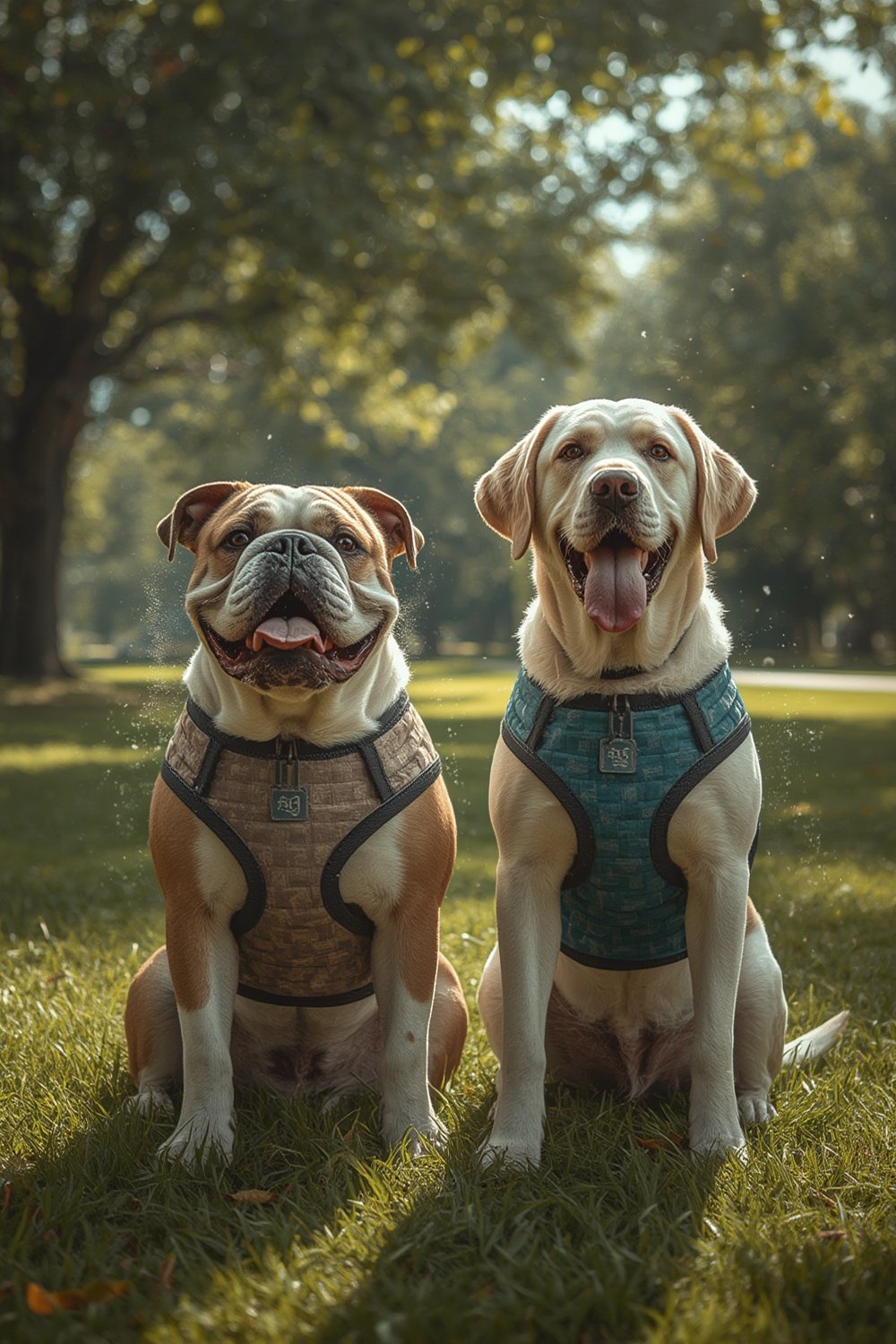
Dog cooling vest options have become a must-have for pet owners, especially if you have a Bulldog or an active breed facing summer’s brutal heat. But do these vests actually work—and which technology gives your dog a real-world edge against overheating? The science is clear, but the effective choice isn’t always obvious in online shops. Here, we break down the best cooling tech, side-by-side comparisons, and a buying checklist so your dog stays safe and comfortable—no guesswork required.
Key Takeaways
- Peer-reviewed research shows evaporative dog cooling vests outperform PCM vests for quickly lowering canine core temperature, especially in dry, breezy conditions (see study).
- Buyers should choose a cooling vest based on dog breed, fit, activity, humidity, and local climate—Bulldogs and brachycephalic breeds need extra attention to heat risk.
- Maintenance and comfort are as crucial as technology—always check vest coverage, weight (wet/dry), and follow manufacturer cleaning care for durability.
- Quick verdict — what the research actually shows
- How different cooling technologies work (evaporative vs PCM vs harness/jacket)
- The peer-reviewed & veterinary evidence (what exists and what’s missing)
- Technical differences: cooling harness vs dog cooling jacket vs evaporative vest (practical implications)
- Choosing the right vest for your dog (fit, breed-specific notes, activity & climate)
- Price & market snapshot (what to tell shoppers)
- What users complain about (and what the research data says about review availability)
- Safety, vet guidance, and recalls — what to tell buyers
- Care, cleaning and maintenance (what content gaps to fill)
- Top 3 content/feature gaps competitors usually miss (opportunities to outrank)
- Article/product page checklist (what this transactional page must include)
- FAQ Section
Quick verdict — what the research actually shows
If you want the fastest, science-backed results to keep your dog cool, evaporative cooling vests are the proven leader. In a 2022 study on military working dogs, premium evaporative systems dropped core temperature and heart rate more than either no vest or a PCM phase-change vest—improving core body temperature by up to 0.769°C fifteen minutes after exercise (see full study). PCM vests, which use cold “ice-pack”-like inserts, still provided meaningful benefit and a longer cooling window (up to 4 hours per recharge), but didn’t match the evaporative vest’s quick impact. For hot-weather walks or runs, research favors evaporative vests—especially in dry air or with airflow. However, if your climate is humid or you need longer periods between “recharges,” PCM vests are viable and easy.
How different cooling technologies work (evaporative vs PCM vs harness/jacket)
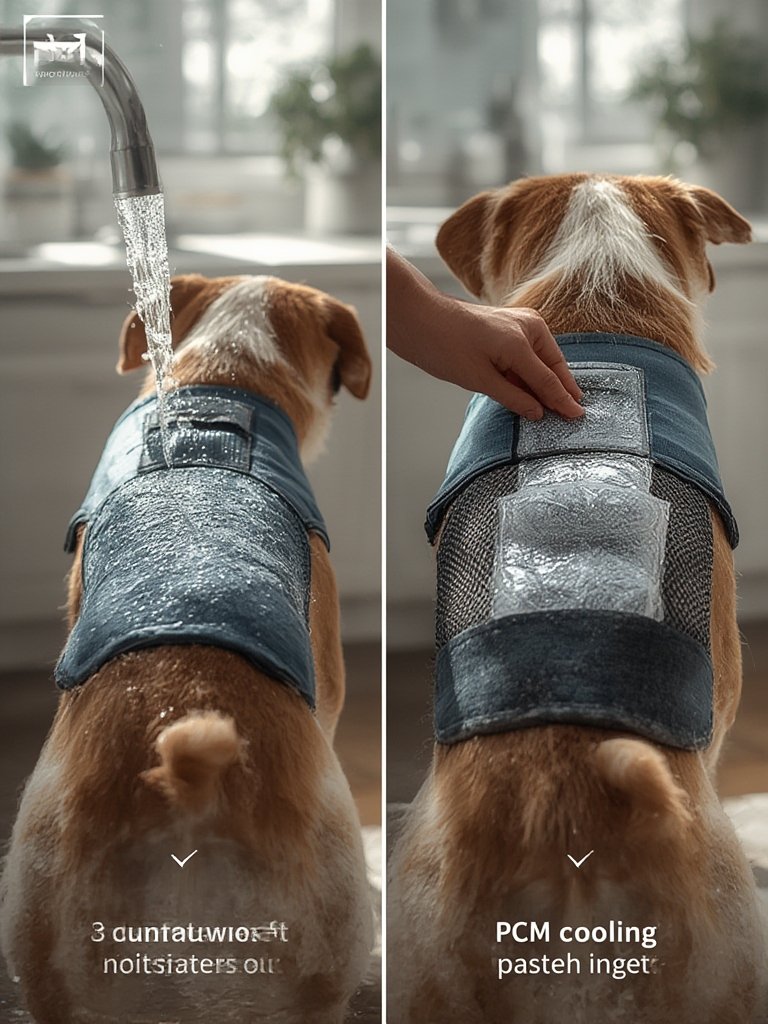
The main dog cooling vest technologies are evaporative cooling vests, PCM cooling vests, and specially designed cooling harnesses or jackets. Each uses a distinct mechanism, and each has pros and cons for cooling, comfort, and convenience.
- Evaporative cooling vest: Made from specially woven, absorbent fabrics. You soak the vest in water for 2–5 minutes (activation), wring it out, and put it on your dog. As the water evaporates, it pulls heat from the dog’s body. Evaporative vests work best in dry climates with airflow because evaporation is more efficient.
- PCM cooling vests: These contain reusable, rigid inserts filled with phase-change gel. Freeze the packs until solid, insert them into the vest, and then put the vest on your dog. The cooled packs absorb body heat as they gradually warm and melt. PCM vests can be effective for up to 4 hours per cycle and are less climate-dependent, performing reliably even in humidity or stagnant air.
- Cooling harness or jacket: These can be either PCM or evaporative but are often designed with a focus on minimal restriction and active lifestyles. Harnesses tend to cover just the chest and shoulders; jackets and vests range from partial body to full trunk coverage.
Each has different weights, fit, and comfort factors. Evaporative vests for XL dogs typically weigh ~380g when dry and ~780g when wet (study).
The peer-reviewed & veterinary evidence (what exists and what’s missing)
The direct science on dog cooling vests is clear on major points, but there are also research gaps. The 2022 military working dog study (PMC9494994) found evaporative cooling vests reduced canine core temperature and pulse rate significantly better than PCM vests or controls, especially shortly after exercise. Similarly, a 2020 paper in Animals corroborated the cooling effect on both body surface and core temps, particularly during and after exertion in hot, dry weather. University of Florida studies showed PCM vests with rechargeable packs helped speed up post-exercise recovery (lowering post-exercise temperature and recovery time see details).
What’s missing? There is no new, direct 2024 trial, and most studies focus on working breeds. No real-world review analytics or independent long-term durability studies have been published yet.
Technical differences: cooling harness vs dog cooling jacket vs evaporative vest (practical implications)
Choosing between a PCM cooling harness, traditional dog cooling jacket, or evaporative cooling vest depends on more than just technology—it’s about coverage, fit, and your intended use:
| Type | Cooling Mechanism | Coverage Area | Activation/Recharge | Weight | Best Use Cases |
|---|---|---|---|---|---|
| Evaporative Cooling Vest | Evaporation | Whole trunk (dorsal/ventral) | Soak 2–5 min in water | Dry: ~380g (XL); Wet: ~780g (XL) | Walks, exercise, dry/hot climates, airflow essential |
| PCM Cooling Vest/Jacket | Phase-change/freezable packs | Mainly cranial half of trunk | Freeze PCM packs (several hours) | Tends heavier, depends on pack size | Extended cooling, humid/no-airflow settings |
| Cooling Harness | Depends on brand (usually PCM or evaporation) | Chest/shoulder focus | Wetting or freeze as required | Light, flexible | Active working dogs, minimal restriction |
Evaporative vests perform best for full-body cooling during active walks or sports. PCM options work anywhere but may restrict motion if sized too big. Harnesses favor freedom of movement, perfect for active field dogs or training. For more on advanced dog care tips in hot weather, see our dog daycare guide.
Choosing the right vest for your dog (fit, breed-specific notes, activity & climate)
No cooling vest is one-size-fits-all. Here’s what to check before buying:
- Breed: Bulldogs, Frenchies, Pugs, and similar brachycephalic breeds face the highest risk. The best cooling vest for bulldogs should prioritize full trunk coverage and a fit that avoids neck/throat pressure.
- Activity Level: Active, working, or frequently-walked dogs benefit most. For sedentary or yard-chillers, consider a lighter harness/jacket style.
- Climate: For dry or breezy climates, choose evaporative cooling vests. In high humidity or still air, a PCM cooling vest may be more effective.
- Fit & Comfort: Ensure the vest does not restrict gait, rub at the shoulders or underarms, or cause chafing. Measure your dog accurately and check size guides on the product page.
- Coverage: Full trunk coverage delivers the best cooling, but check your dog’s tolerance for vest weight and coverage area, especially for older or mobility-limited pets.
Evaporative systems are optimal for dry/hot conditions with airflow; PCM vests last longer per cycle and are climate-flexible (up to 4 hours cooling window). If you’re unsure about fit or breed-specific risk, consult your vet—especially for flat-faced dogs.
Price & market snapshot (what to tell shoppers)
Accurate 2024 per-product pricing data is unavailable—as is brand pricing for the best cooling vest for bulldogs or specific working breeds. But as a guide, expect to pay more for larger sizes, premium wicking materials, and PCM technology with reusable packs. Market analysis valued the global evaporative dog cooling vest market at around USD 156.2 million in 2024 (market report), reflecting growing demand for quality solutions. Always scan product pages for clear price/size breakdowns—bulldog/large-breed vests are often at the higher end.
What users complain about (and what the research data says about review availability)
No reliable, aggregated data on user complaints from Amazon, Chewy, or social media surfaced in current research (2024). What does this mean for you? Expect possible issues with sizing accuracy, vest weight (especially wet for evaporative types), movement restriction, durability, and recharge inconvenience. We recommend checking product pages for user review summaries and detailed FAQs to get a sense of pain points for your chosen model.
For purchasing other pet gear, explore our best cat toys guide for how to leverage real shopper feedback before buying.
Safety, vet guidance, and recalls — what to tell buyers
Current research reveals no product safety recalls or veterinary warnings related to dog cooling vests or jackets over the past two years (2024–2026 window). The leading studies reported no side effects or adverse events when evaporative or PCM vests were used correctly on working dogs (PMC9494994). Still, always observe your dog the first time you use any cooling vest. Watch for possible overheating, chafing, fit issues, or allergic reactions. For brachycephalic breeds or heat-sensitive pets, consult your veterinarian before use. See more everyday dog care and emergency tips in our complete guide.
Care, cleaning and maintenance (what content gaps to fill)
A big gap in available research is cleaning and maintenance direction from manufacturers. For best durability and hygiene, follow this protocol:
- Evaporative vest: Rinse thoroughly after use. Air dry completely before storage to prevent mold or odor. Check for seam splits or fabric wear. Reactivate with water for 2–5 minutes before each use.
- PCM vest: Remove PCM packs and wipe them down after use. Freeze packs as instructed, typically overnight. Clean fabric shell per the label—most are hand-wash only. Inspect the vest for punctures or leaks from PCM packs.
- For all types, store in a dry place out of direct sunlight. Always defer to the manufacturer’s label for specific washing temperatures or machine/dryer safety.
Still have a new puppy or kitten at home? Check out our proven beginner pet care guides for all-around maintenance routines.
Top 3 content/feature gaps competitors usually miss (opportunities to outrank)
Most dog cooling vest “top lists” skip key evidence and practical details. Here are the unique, research-backed features you won’t find elsewhere:
- Long-term, repeated-use performance data: There are virtually no studies on how cooling vests hold up after many uses or commercial washing cycles, especially for working dogs or daily heavy users.
- Direct head-to-head efficacy across breeds and climates: Data is still limited mostly to military or working breeds in dry heat. Results may differ for pets with different coat types, densities, or in sticky humidity.
- Exact cooling durations and recharge needs in real use: Few guides state precisely how long PCM vests last in extreme heat or how quickly evaporative tech dries out on a scorching day. Look for this info—and field-test if you can. For more on optimizing daily pet comfort, view our summary of wet vs dry pet food—brand transparency matters.
Article/product page checklist (what this transactional page must include)
- Mention the main science: cite the 2022 MWD, 2020 Animals, and University of Florida studies, with links for vet credibility.
- Label the vest’s cooling mechanism (evaporation or PCM phase-change), plus full activation/recharge times and cycles (2–5 min for evaporative activation, up to 4 hours PCM duration).
- Give coverage and weight specs—ideally both dry and wet. Dry: ~380g XL; Wet: ~780g XL, if available.
- Include a detailed fit guide and breed-specific notes (Bulldogs, senior dogs, etc.).
- Show price/size breakdowns on the shop page—or clearly state if pricing is unavailable.
- Surface user reviews and detailed FAQs so buyers know common fit/care issues or complaints.
- Publish clear cleaning and maintenance steps as per manufacturer instructions.
- Display a safety notice and suggest consulting a vet for Bulldogs or high-risk dogs before first use.
Authors: Rely on this checklist to build a clear, complete dog cooling vest product page that converts knowledge-hungry buyers. Want more actionable guides? See our article on custom reptile enclosures for another research-driven approach to pet gear buying.
FAQ Section
Do dog cooling vests really work in hot weather?
Yes—multiple studies confirm dog cooling vests, especially evaporative types, can significantly reduce core body temperature and pulse during and after exercise in hot weather. Effectiveness is highest in dry climates with airflow. PCM vests also help and are more versatile in humid or indoor conditions.
What’s the best cooling vest for Bulldogs or brachycephalic dogs?
Look for a vest with full trunk coverage and a fit that leaves the airway clear. Evaporative vests are effective, but always verify sizing guides and check for reviews specific to Bulldogs. PCM vests are an option if humidity is high or airflow is limited.
How long does a PCM dog cooling vest stay cold?
Most PCM vests offer up to around 4 hours of cooling per recharge, but this can vary based on ambient conditions, your dog’s activity, and vest size. Always freeze PCM packs thoroughly before use.
Are there safety risks or recalls for dog cooling vests?
No known recalls or significant safety warnings have been issued in the last two years (2024–2026 window). Always follow manufacturer instructions, check for a proper fit, and supervise your dog when using any cooling vest.
How do I clean and maintain a dog cooling vest?
For evaporative vests, rinse and air dry thoroughly before storage. PCM vests should have removable packs wiped down and frozen as needed; the fabric shell is commonly hand-wash only. Always check and follow the manufacturer’s cleaning label.
—