

Cat dental treats VOHC approval is the gold standard for pet parents who want proven at-home dental care, but what does that label really guarantee about effectiveness and safety? If you’re a cat owner who wants real clinical evidence behind every dollar you spend on treats, chews, or additives, this guide is for you.
Key Takeaways
- VOHC-approved cat dental treats meet strict clinical study standards showing at least 20% reduction in plaque or tartar—but exact product results are not made public.
- The VOHC has approved just four specific edible treats for cats as of 2024: Feline Greenies, Purina DentaLife, Whiskas Dentabites, and Purina Pro Plan Veterinary Diet Dental Bites.
- Actual user complaints, long-term safety data, and head-to-head comparisons with water additives or dental diets are gaps in the current research.
- What “VOHC approved” actually means for cat dental treats
- The VOHC-approved edible cat treats list (as of 2024)
- What the clinical evidence actually reports (and what it doesn’t)
- Chews/treats vs. water additives vs. dental diets — practical comparison for at-home use
- Price ranges & ingredient profiles — current data gaps and how to evaluate labels
- Safety, side effects, and common complaints — what’s documented (and what isn’t)
- Practical buying & use guide (daily routine, palatability, size, frequency, and vet check)
- Known evidence gaps and the three questions top articles fail to answer
- Recommended call-to-action & sources to validate claims
What “VOHC approved” actually means for cat dental treats
The Veterinary Oral Health Council (VOHC) review is the benchmark for evaluating cat dental products. When you see “VOHC approved” on cat dental treats, it means the treats have passed controlled clinical trials and demonstrated at least a 20 percent reduction in plaque or tartar compared to no treatment, meeting VOHC’s acceptance criteria.
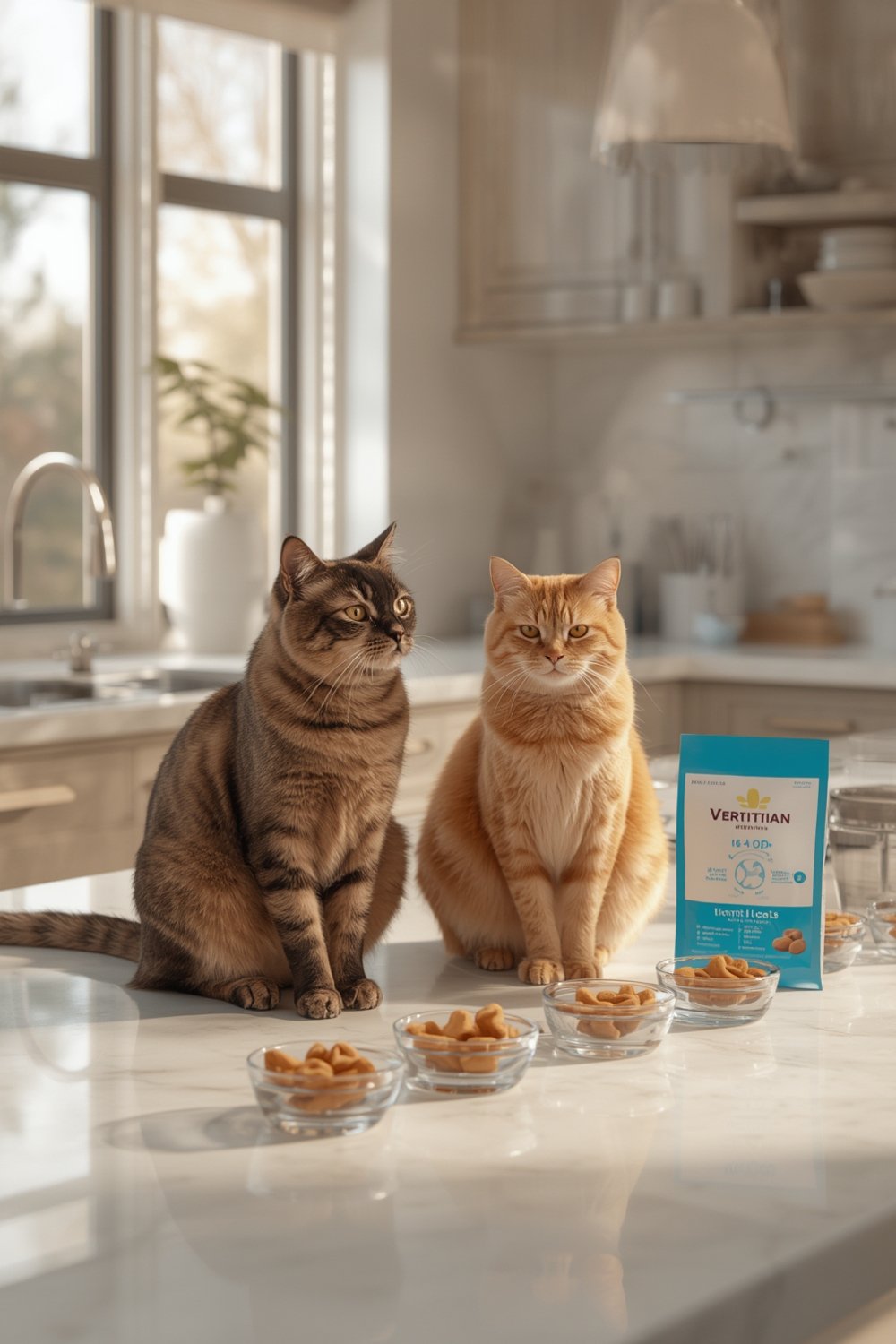
This approval is binary—either the dental treat meets the minimum threshold, or it does not. Brands cannot use the VOHC seal based on marketing claims or anecdotal results. All VOHC accepted-products must publish data showing that, in at least two independent studies, the treat reduced either tartar or plaque by 20 percent or more in cats (VOHC Accepted Products Table).
However, VOHC does not release detailed efficacy results for each product. So, while approval means the treat’s benefit is real, the exact size of the benefit is not public. That means “VOHC approved” is a safety net against marketing fluff, but it does not tell you which treat is objectively the best based on clinical outcome size.
The VOHC-approved edible cat treats list (as of 2024)
The VOHC maintains a public list of all edible cat dental treats that have met their standard as of July 2025. These products have data to show at least a 20 percent reduction in tartar (and in some cases, plaque) under controlled trial conditions. Only four specific edible cat treat products appear on the 2024 VOHC list (VOHC official site):
- Feline Greenies® Feline Dental Treats (Tartar control, accepted 2005)
- Purina DentaLife Daily Oral Care Cat Treats (Tartar control, accepted 2016)
- Whiskas® Dentabites Cat Treats (Tartar control, chicken & salmon flavors, accepted 2017)
- Purina Pro Plan Veterinary Diet Dental Bites (Cat Treat) (Plaque & Tartar control, accepted 2019)
This is it—there are no more edible treat products on the 2024 list. Any other treat making claims of “tartar control” or “cat teeth cleaning at home” may be beneficial, but has not met the VOHC’s published threshold. Note: The VOHC list also includes water additives and dental diets—this section focuses on edible treats only.
For a regularly updated list and precise details, bookmark the official VOHC accepted-products table (PDF).
What the clinical evidence actually reports (and what it doesn’t)
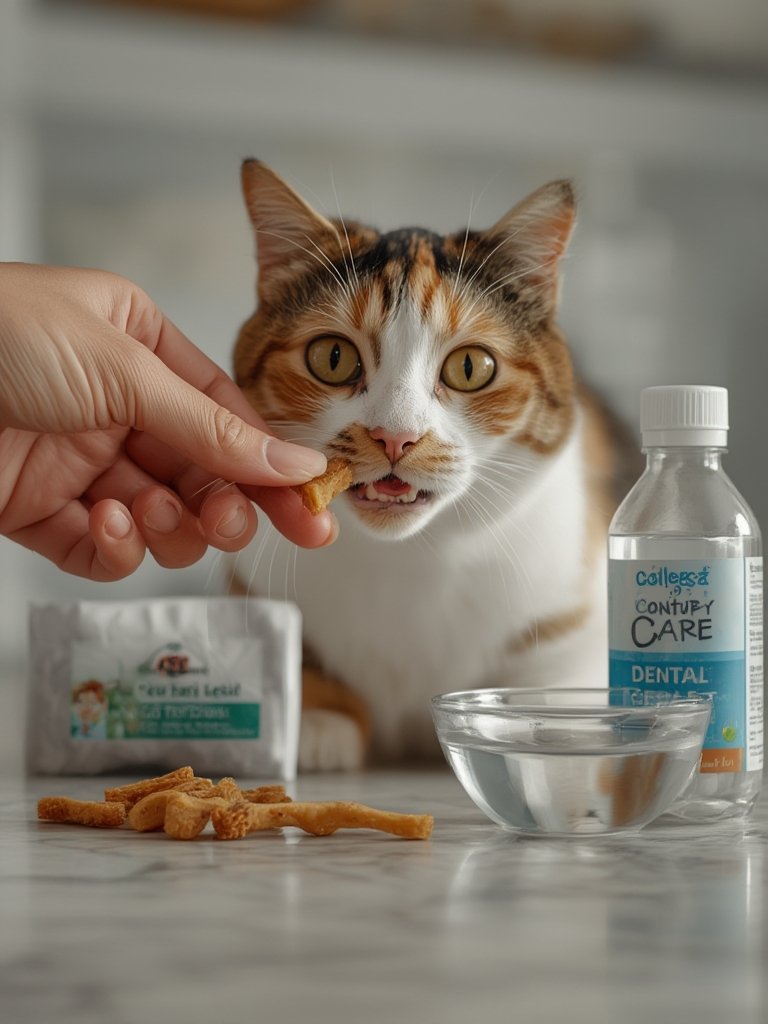
Here’s the catch: while all VOHC approved dental treats for cats have proven at least a 20 percent reduction in tartar or plaque in studies, VOHC publications and brand websites do not reveal exact product-by-product efficacy rates (like “reduces tartar by 37% vs. X care”).
To date, no direct, peer-reviewed studies in the public domain have compared “cat dental chew plaque” reductions across different VOHC-approved treats. What’s shown is simply “threshold met.” This means:
- You do not get to see which brand or treat is better by percentage—just that each has passed a meaningful bar.
- Marketing claims (like “clinically proven to clean teeth”) should be cross-checked directly with VOHC’s public records.
This absence of detailed data is frustrating for detail-oriented buyers—and can make comparison shopping tricky. VOHC’s standard means you’re avoiding ineffective or “snake oil” products, but there is still guesswork when choosing among the accepted options.
Chews/treats vs. water additives vs. dental diets — practical comparison for at-home use
When considering at-home dental care, not all VOHC-accepted products are created equal in terms of how easy they are for owners (and cats) to use, their potential cost, and likely results. Unfortunately, there are no head-to-head published studies that directly compare results between edible treats, water additives, or dental diets for cats.
| Category | Ease of Use | Cost | Results (VOHC Claims) |
|---|---|---|---|
| Dental Chews/Treats (e.g., Greenies, Whiskas Dentabites) | High—given daily as treats, most cats accept them if palatable (VOHC) | Consumer-priced; widely available at pet stores & vets | ≥20% tartar reduction shown in studies |
| Water Additives (e.g., Healthymouth®, ProDen PlaqueOff) | Highest—just add to water bowl, no extra handling | Consumer-priced; available in bottles or powders | ≥20% reduction (plaque/tartar), per VOHC |
| Dental Diets (special prescription foods) | Moderate—requires full meal swap; some cats are picky | Pricier than regular food; usually vet-purchased | VOHC listed; specifics not compared to treats/additives |
Choose the format that your cats actually enjoy and that fits your daily routine—palatability and owner consistency are real-world hurdles. Using interactive play can help your cats become more receptive to handling or treats.
For even more on cat oral hygiene, see our Complete Guide to Cat Urgent Care.
Price ranges & ingredient profiles — current data gaps and how to evaluate labels
No published source—including the official VOHC lists—provides actual price points or ingredient breakdowns for VOHC-approved cat dental treats. Here’s how you can take control as a buyer:
- Review the package label for calories, protein and fat contents, known allergen ingredients (wheat, chicken, fish, etc.), preservative types (natural vs. synthetic), and treat shape/texture (crunchy vs. soft).
- Check trusted retailer sites or the brand website for current pricing and compare across stores.
- If your cat has food sensitivities, review the full ingredient list online before purchasing.
For cats with dietary restrictions or allergies, consider rotating treat flavors or asking your veterinarian to review ingredients. For those seeking complementary enrichment, check our hands-on slow feeder bowls for cats or best cat toys for indoor cats.
Since no head-to-head cost effectiveness data exists, focus on what works for your cat and budget.
Safety, side effects, and common complaints — what’s documented (and what isn’t)
According to the top veterinary and product databases—plus the official VOHC lists—no safety signals, documented side effects, or significant user complaints have been reported for VOHC approved cat dental treats or water additives as of 2024 (Source). This means:
- No published data linking approved treats or additives to GI upset, allergies, or choking hazards in healthy cats.
- No trend of refusal/eating issues distinct to VOHC-approved treats compared to regular treats.
That said, real-world owner experience will always vary. Monitor your cat for mild digestive changes (vomiting, soft stool, or hard-to-chew crumbs), allergic reactions (itching, facial swelling), or reluctance to eat a new treat. If any side effect occurs, stop use and consult your vet promptly.
If your cat is a food gulper or elder, break treats into smaller chunks or soak them lightly in water before serving. For more on handling sensitive cats, see our advice on choosing the right wet or dry cat food.
Practical buying & use guide (daily routine, palatability, size, frequency, and vet check)
For most indoor cats, here’s a step-by-step approach to introducing and using VOHC approved dental treats for cats:
- Start Small: Offer one treat at a time and monitor for acceptance and digestive issues.
- Build a Habit: Use VOHC-approved treats as a daily or every-other-day snack. Avoid overfeeding by counting the treat calories toward your cat’s daily total.
- Monitor Results: Check teeth monthly for visible tartar and gum health. Note any smell, buildup, or redness.
- Special Circumstances: For seniors or medically complex cats, check with your veterinarian first—especially if your cat has kidney, allergy, or digestive issues.
- When to See a Vet: If bad breath, bleeding gums, or tooth discoloration persists despite home care, schedule a professional checkup. Treats are not a substitute for a dental cleaning if disease is present.
- Complementary Steps: Consider combining treats or chews with a cat water fountain to help boost hydration and oral health, or try a slow feeder to prevent gulping.
Known evidence gaps and the three questions top articles fail to answer
What we couldn’t find:
- Product-by-product quantitative clinical trial data (e.g., Greenies vs. DentaLife exact plaque reduction in cats)
- Long-term, multi-year safety or efficacy studies for daily dental treat use in mixed pet populations
- Direct head-to-head comparative trials between edible treats, water additives, and dental diets for cost-effectiveness and palatability
If these details are critical for your peace of mind, ask your veterinary team for the latest published studies or clinical experience. You can also email product manufacturers directly to request more transparent trial data, especially if your cat has special health needs.
For additional resources on pet product safety, see our enzyme cleaner review for cat urine removal.
Recommended call-to-action & sources to validate claims
Ready to pick a cat dental treat with confidence? Here’s how to make a safe and effective choice:
- Always verify VOHC approval on the official VOHC product table before buying.
- Discuss product options with your veterinarian, especially if your cat has existing conditions or is on medication.
- Look for packages with transparent claims, ingredient lists, and clear dosing guidelines.
- Use product and price comparison tools or trusted online retailers to check current costs.
Cat owners focused on preventive care should combine VOHC-approved treats with regular home monitoring and occasional professional cleanings for best long-term oral health. If a label claim seems too good to be true, ask for primary study citations or consult your vet.
Stay informed and realistic—using evidence-backed cat dental treats VOHC is a smart move, but real-world outcomes depend on your cat’s tolerance, habits, and your consistency.
Frequently Asked Questions
How often should I give VOHC approved dental treats to my cat?
Most brands recommend once daily use. Always check the packaging and count the treats toward daily calorie allowance to prevent weight gain.
Is it safe to use dental treats with water additives at the same time?
Yes—there’s no evidence of risk in combining formats. Monitor your cat for individual tolerance. When in doubt, consult your vet.
Can I use VOHC approved dental treats for kittens or senior cats?
Check the package—some may be too hard or high-calorie for kittens, and seniors with dental disease may need softer or smaller pieces. Consult your vet if unsure.
What should I do if my cat refuses all dental treats?
Try a new flavor, change the format, or try water additives or dental diets instead. Not all cats will accept treats, and that’s okay—there are alternatives.
Are there any risks or side effects reported with VOHC approved cat dental treats?
No specific safety concerns are documented in top sources. Watch for rare digestive upset or allergies, and discontinue if issues appear.