

slow feeder bowl is a practical solution for pet owners struggling with fast-eating, vomiting, or stress at mealtime. If your cat inhales food and occasionally vomits, you’re not alone—yet sorting marketing hype from evidence-based features is surprisingly tough. Below, you’ll find realistic, veterinary-aware advice to help you select, introduce, and get real results from a slow feeder bowl for cats (and other alternative feeders) based on what actually works—plus what to watch out for before you buy.
Key Takeaways
- There are no 2023–2026 clinical studies quantifying how much slow feeder bowls reduce vomiting or bloating for cats, but veterinarians generally recommend them to discourage “scarf and barf” eating.
- Buyer complaints focus on cleaning difficulty, capacity, and material safety—plastic feeder bowls can cause feline chin acne, especially if not cleaned thoroughly.
- Prioritize food-safe, easy-to-clean materials, bowl shape (for whisker comfort), and gradual introduction to ensure your cat accepts its slow feeder and avoids new meal-time problems.
- Why slow feeders matter for cats (what the research actually supports)
- The evidence gap and why this guide is different
- How slow feeders, puzzle feeders, and lick mats differ — design, usability, and wet food suitability
- Real buyer pain points: cleaning, materials, cat adaptability
- Practical introduction plan — how to get a fast eater to accept a slow feeder
- Bowl design, whisker fatigue, and ergonomics — what we know and what we don’t
- Materials, hygiene, and safety: what to prioritize (including chin acne concerns)
- Safety checklist & what to watch for when buying
- Price expectations and value by type and material (2024 market context)
- Recommended product features and model archetypes (quick shopping guide)
- Monitoring outcomes: how to tell if a slow feeder is reducing vomiting or bloating
- FAQs and troubleshooting
Why slow feeders matter for cats (what the research actually supports)
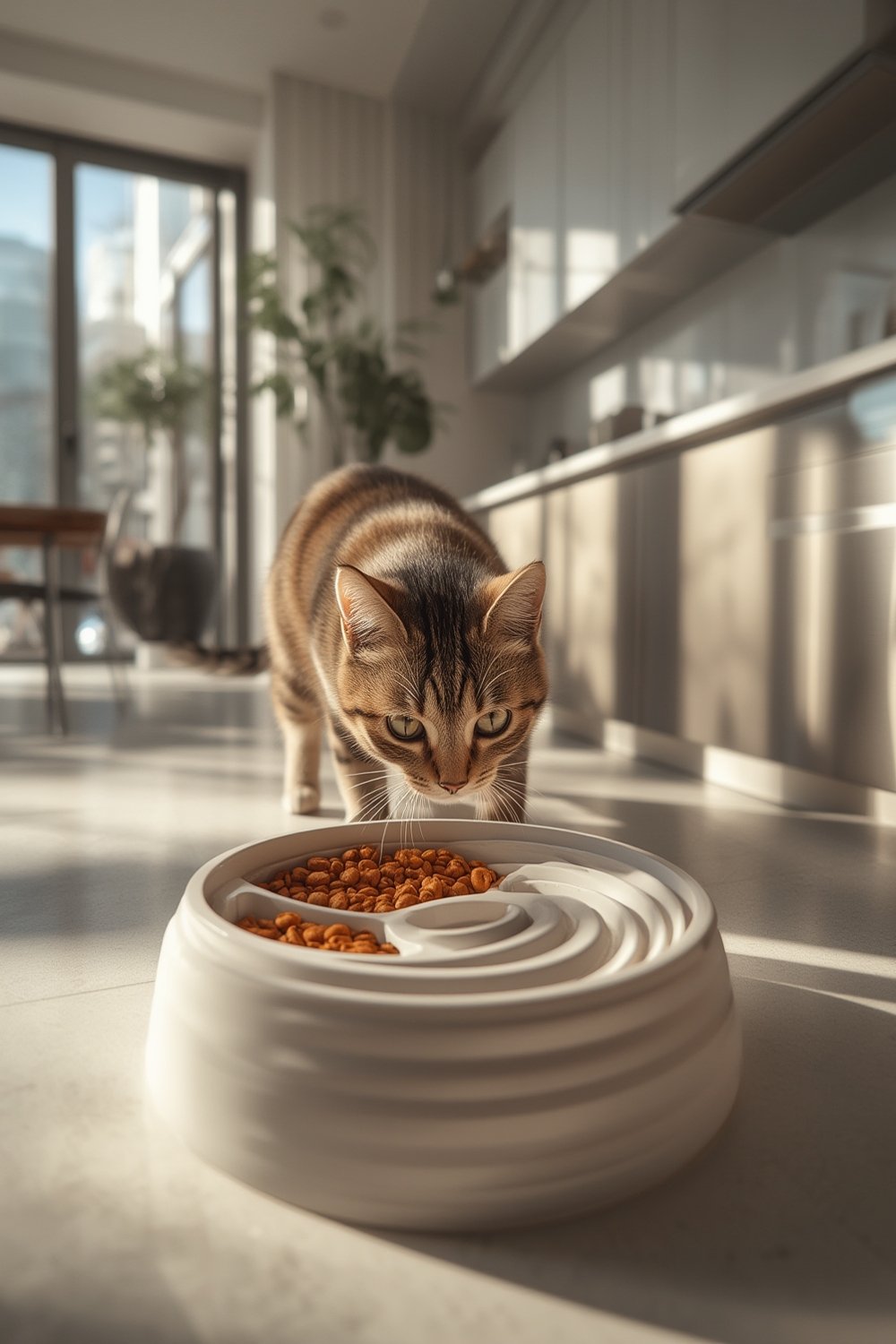
Veterinary sources consistently recommend a slow feeder bowl for cats as a practical way to slow rapid intake, reduce “scarf and barf” (regurgitation after eating too quickly), and minimize indigestion and bloating. These feeders introduce barriers that force cats to work around ridges, bumps, or textured patterns in pursuit of each bite of food. This added challenge can prevent vomiting episodes linked to bolting meals, encourage mindful eating, and even reduce boredom in indoor cats. However, while benefits are widely discussed by veterinarians and pet wellness experts, hard data remains missing from the scientific record.
No clinical or veterinary studies from 2023–2026 were identified that quantify effectiveness of slow feeder bowls for cats in reducing vomiting, bloating, or digestive issues compared to traditional bowls. (source, Catster, market report)
The evidence gap and why this guide is different (what competitors miss)
Most buying guides repeat generic benefits of slow feeder bowls (“slows eating”, “reduces vomiting”) without clinical statistics or user-focused troubleshooting. Market reports show increased demand for cat slow feeder puzzle products, but no peer-reviewed data confirms efficacy for reducing vomiting, indigestion, or anxiety. This guide fills those gaps by:
- Citing the absence of controlled veterinary studies with quantified outcomes
- Transparently relaying buyer-reported problems and adaptation issues
- Offering a stepwise introduction, cleaning protocols, and feature selection tied to verified user pain points—not just marketing copy
As one recent review summarized: Veterinary sources note benefits but provide no quantified data or controlled comparisons; market reports claim demand increases (see below) but lack cat-specific efficacy numbers.
How slow feeders, puzzle feeders, and lick mats differ — design, usability, and wet food suitability
The three core interactive feeder types—slow feeder bowls, cat puzzle feeder for wet food, and lick mat for cats—address fast eating in distinct ways:
- Slow feeder bowls feature molded mazes, ridges, or barriers. They’re best for dry kibble or pate-style wet food clumps.
- Cat slow feeder puzzle devices add elements requiring cats to paw, move, or manipulate pieces (e.g., sliding disks) to access small food amounts. These work for dry kibble and some wet food, in limited volume.
- Lick mats for cats are flat, rubberized mats with shallow textured surfaces. They spread out wet food thinly, forcing cats to lick repeatedly, which slows eating further but can make a mess if overfilled.
Puzzle feeders have mazes/ridges for manipulation; lick mats have flat textured surfaces for licking wet food. Puzzle designs may trap wet food residues more than flat lick mats.
For a breakdown on food types and serving suitability by product, see the comparison below:
| Feeder Type | Suitable for Dry Food? | Suitable for Wet Food? | Cleaning Ease | Mess Risk |
|---|---|---|---|---|
| Slow Feeder Bowl | Yes | Yes (pate/chunks) | Medium | Moderate |
| Cat Puzzle Feeder for Wet Food | Yes | Yes (small portions) | Challenging (wet food residues) | High |
| Lick Mat for Cats | No | Yes (all wet food types) | High (if dishwasher safe) | Low—unless overloaded |
See: Catster
Real buyer pain points: cleaning, materials, cat adaptability
Real-world reviews reveal buyer frustrations commonly overlooked by marketing:
- Small capacity (16.1% of negatives): Bowls often hold less food than expected (a problem for large or multiple cats).
- Durability issues (8.4%): Thin plastic or silicone units can warp, crack, or be chewed through—especially by determined cats.
- Cleaning struggle (unspecified): Complex mazes trap wet food, grow mold, or resist dishwasher cleaning.
- Chin acne risk: Plastic and textured silicone can contribute to feline chin acne if not cleaned thoroughly. (Catster)
- Adaptability issues: Some cats ignore or reject new feeders, especially without a proper transition or if the feeder’s ridges are too deep for their face shape.
On the upside, 11.4% of positive reviews praise dishes that are genuinely easy to clean, have few nooks, or are dishwasher safe. (Accio: Market Insight)
Internal tip: For picky or anxious cats, see our cat anxiety calming diffuser roundup for feeding-time stress reduction pairing ideas.
Practical introduction plan — how to get a fast eater to accept a slow feeder
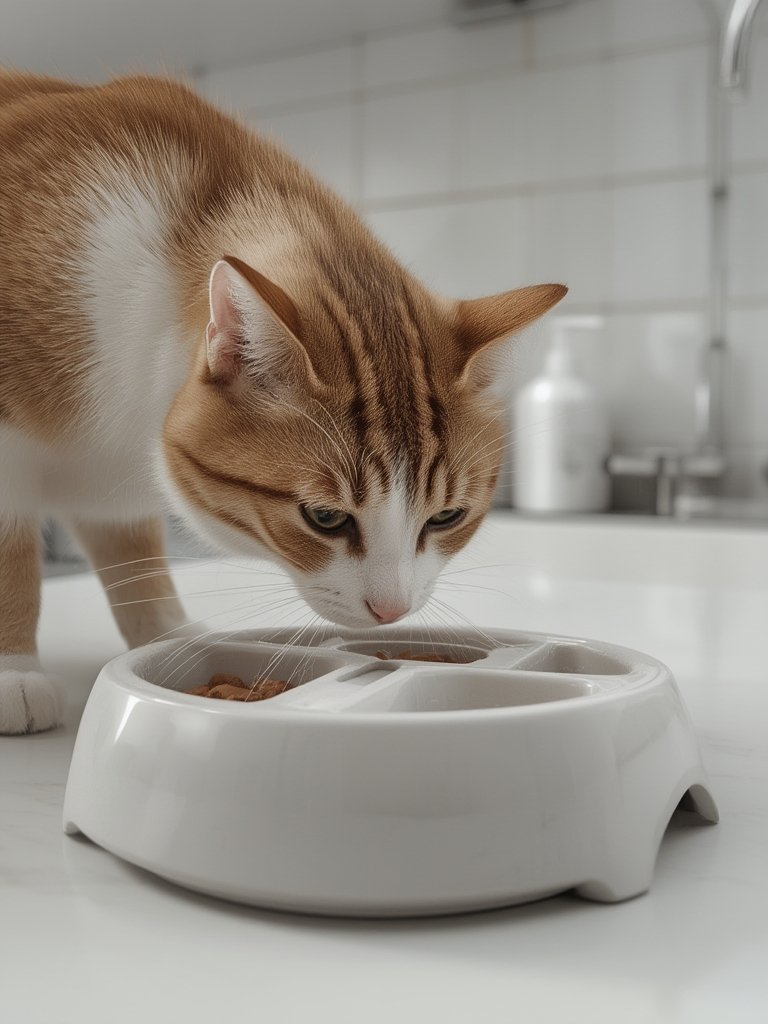
Introducing a slow feeder bowl for cats requires patience and incremental change. Here’s how to reduce your odds of meal avoidance or stress:
- Choose the right model:
- Pick a bowl with a shallow, whisker-comfortable profile if your cat is sensitive to touch (see our notes below on whisker fatigue).
- Check if it’s suitable for your food type—puzzles for dry food/pate, lick mats for wet food only.
- Begin gradual introduction:
- For the first 3–5 feedings, portion food between the slow feeder and the regular bowl.
- Pair use of the new bowl with favorite treats sprinkled in the maze, especially if your cat is hesitant.
- Monitor closely:
- Watch for stress, avoidance, or persistent vomiting—if so, increase transition time or temporarily return to the standard bowl.
- If your cat moves the feeder, place it against a wall or use non-slip mats.
- Customize for your cat:
- Don’t hesitate to rotate styles: some cats adapt better to one feeder type or pattern than another.
- Use size-appropriate models for kittens or flat-faced breeds.
Recommendations emphasize gradual introduction and size customization to improve adaptability and reduce negative feedback.
Internal tip: Need more practical mealtime enrichment? Try these interactive cat toy tips for additional feeding games.
Bowl design, whisker fatigue, and ergonomics — what we know and what we don’t
“Whisker fatigue” is believed to occur if a cat’s sensitive whiskers brush against the bowl sides during mealtime, possibly causing avoidance or agitation. Widely sold as “whisker fatigue bowl” options, these bowls are typically shallow and wide to minimize whisker contact—some are also slightly elevated to further ease access.
- Currently, no clinical studies or published technical specs define the ideal shape, width, or height for slow feeder bowls to prevent whisker fatigue—product claims are based on buyer preference and anecdotal reviews.
- Elevated bowls with non-slip bases are praised in 19.1% of positive reviews but lack standardization.
Search results do not address specific whisker fatigue guidelines; elevated designs with non-slip bases are praised in reviews (19.1% positive), but no technical specs were identified.
If your cat balks at deep bowls, try a shallow, hunting-style dish or raised platform—see more ideas in our wet vs dry cat food feeding guide.
Materials, hygiene, and safety: what to prioritize (including chin acne concerns)
Material selection is more than an afterthought if your cat is prone to acne, allergies, or food aversions. Key points:
- Plastic: Lightweight, cheap, and easily molded but can harbor bacteria in scratches and is linked to chin acne in sensitive cats.
- Silicone: Flexible, often dishwasher-safe, but some brands retain food smells and can trap micro-particles in textured surfaces. Choose only food-grade or platinum silicone.
- Ceramic and Stainless Steel: More hygienic (especially for lick mats) and durable. Heavier bowls reduce tip-over risk and rarely cause acne. Check for food-safe glaze and seamless edges.
Plastic raises chin acne concerns; market insights note preferences for ceramic and stainless steel for durability, but no specific safety certifications, material standards, or recalls were identified in the research.
Choose dishwasher-safe designs with minimal grooves, especially for wet food. Replace worn bowls at first sign of deep scratching or surface peeling. Read more on daily hygiene in our cat urgent care guide.
Safety checklist & what to watch for when buying
Prioritize physical and chemical safety—even premium brands sometimes skip detailed testing or transparency. Here’s a rapid buyer’s checklist:
Quick Safety Checklist for Cat Slow Feeder Bowls
- Food-safe and BPA-free (look for FDA/GRAS for US, LFGB in EU when possible)
- Dishwasher-safe for daily cleaning (top-rack if plastic/silicone)
- No sharp edges, deep grooves, or loose removable parts
- Stable, non-slip base or weighted (to prevent sliding/flipping)
- Transparent, reputable manufacturer with documented material standards
No specific safety certifications, material standards, or recalls for cat slow feeder bowls or puzzle feeders were identified in the search results.
Price expectations and value by type and material (2024 market context)
What does good value look like in slow feeder bowls today? While specific 2024 per-unit price ranges are missing in published data, market research shows:
- Low-cost models: Basic plastic or silicone puzzle feeders typically cost less but may require more frequent replacement and are less durable.
- Premium value: Ceramic and stainless steel models justify higher upfront spending with enhanced hygiene, weight, and reluctance to scratch or absorb odors.
Market demand is strong: Global market value for cat slow feeder bowls was reported at USD 320–485 million in 2024, with projections to USD 620–950 million by 2033. (market data)
Preference trends: Consumers favor affordable plastic/silicone for maintenance and cost efficiency, versus durable ceramic/stainless steel for longevity.
Explore more on feeding investments in our cat water fountain stainless steel research.
Recommended product features and model archetypes (quick shopping guide)
Here’s a targeted feature checklist and “model archetype” suggestions for deciding what works for your situation:
- Dishwasher-safe design (especially for wet foods)
- Wide, shallow shape to reduce whisker stress (“whisker fatigue bowl” style, if relevant)
- Minimal, easy-to-clean maze design for wet food—avoid deep, narrow slots or excessive protrusions
- Material transparency: BPA-free, food-grade silicone or ceramic/glass with no visible cracks or chips
- Stable base (especially for kittens or multi-cat homes)
3 Model Archetypes with Example Use-Cases:
- Budget Plastic Puzzle Feeder: Best for owners who need a low-cost starter for dry kibble or single-cat homes and plan to replace regularly. Examples: PetSafe Fun Feeder, Petstages Interactive Cat Feeder, Frisco Plastic Maze Bowl.
- Hygienic Silicone Lick Mat for Wet Food: Designed for wet-food addicts or cats prone to scarfing pâté. Examples: LickiMat Casper, MateeyLife Slow Feeding Mat, Hyper Pet IQ Mat.
- Premium Stainless/Ceramic Whisker-Friendly Slow Bowl: Durable, heavy, and suitable for both wet and dry foods—ideal for flat-faced breeds or chin-acne-prone cats. Examples: Necoichi Ceramic Raised Bowl, Van Ness Stainless Steel Slow Feeder, Bone Dry Ceramic Maze Feeder.
For multi-cat homes, consider a separate feeder per cat to minimize rivalry—learn more in our guide to multi-cat hygiene.
Monitoring outcomes: how to tell if a slow feeder is reducing vomiting or bloating
How do you know if your interactive feeder for cats is working?
- Track vomiting frequency: Is it changing over 1 to 4 weeks?
- Note mealtime duration: Are bouts longer and less frantic?
- Watch for additional digestive issues: Less regurgitation, stable appetite, improved stool quality.
- Monitor cat comfort: No signs of frustration, avoidance, or whisker stress (see above).
Veterinary sources recommend slow feeders to reduce vomiting risk, but provide no quantified data or controlled comparisons to indicate expected improvement timelines.
If your cat’s vomiting continues longer than 1–2 weeks after a proper transition—or worsens—consult your veterinarian for clinical evaluation. See emergency signs in our cat urgent care guide.
FAQs and troubleshooting (concise, evidence-aware answers)
Are slow feeder bowls safe for wet food, or only dry food?
Most slow feeder bowls and lick mats are safe for both wet and dry foods—just be sure to choose a design with gentle ridges, minimal crevices, and truly dishwasher-safe materials for easier cleaning. Puzzle designs may trap wet food residues more than flat lick mats.
How often should I clean my cat puzzle feeder for wet food or lick mat for cats?
Clean after every meal if wet food is used (ideally in the dishwasher or with hot soapy water) to prevent mold, odors, or acne-causing bacteria. For dry food only, every 1–2 days is adequate, but still rinse if signs of residue appear.
Can I use the same slow feeder for multiple cats?
It’s safest to provide one feeder per cat to reduce food guarding or rivalry. Most models are sized for single-cat portions and limited capacity; small capacity is a common buyer complaint (16.1% of negatives).
How do I know if my cat is experiencing whisker fatigue?
Signs include avoiding food in deep bowls, pawing food out, or acting anxious at mealtime. Choose a shallow, wide slow feeder bowl or whisker fatigue bowl if you notice these behaviors.
Are there any certifications or safety standards I should look for?
No formal US or global safety certifications specific to cat slow feeders are enforced. Look for products labeled BPA-free, food-grade, and dishwasher-safe by reputable manufacturers. Monitor for recalls via the manufacturer’s website or product updates.
Conclusion
Choosing the right slow feeder bowl for cats requires a realistic view—no miracle fixes, but marked improvement for most fast eaters if you prioritize safety, ease of cleaning, and gradual transition. Track your cat’s outcomes, don’t settle for cheap plastic alone, and always consult your vet if vomiting persists. Shop smart, observe results, and ensure happier, healthier meals for your cat starting today.