

cat water fountain stainless steel is the clear choice for pet owners who prioritize hygiene, easy cleaning, and long-lasting quality in their cats’ hydration setup. If you’re tired of biofilm, cloudy plastic, or too-frequent replacements, here’s the real story on what you gain (and give up) when you go stainless—and exactly how to choose and care for the right model in 2024.
Key Takeaways
- Stainless steel cat water fountains are growing fastest with an 8% CAGR, due to demand for hygiene and durability.
- Real-world maintenance facts—like filter replacement frequency, deep-cleaning steps, and true hygiene certifications—are rarely explained in top articles.
- Expect to pay more upfront for stainless, but benefit from easier cleaning, fewer odors, and longer-lasting hardware compared to plastic and ceramic.
- Quick verdict — is stainless steel worth it?
- Why choose a stainless steel cat water fountain?
- 2024 market snapshot — sales, share and growth you should know
- What users complain about — the actual reporting (and notable data gaps)
- The three hygiene & maintenance topics top articles miss
- Buying checklist — certifications, specs and quiet-operation metrics to demand
- Cost expectations in 2024 — stainless steel vs. plastic, ceramic, and cordless models
- Realistic filter replacement cadence & annual replacement cost
- Cordless stainless steel fountains vs. corded — advantages and limitations
- Quick maintenance plan — what to do weekly, monthly, quarterly
- Conclusion + short buyer’s checklist (TL;DR)
- FAQ
Quick verdict — is stainless steel worth it?
If you want the most hygienic, durable, and easy-to-clean cat water fountain, stainless steel is the best material in 2024. While cat water fountain stainless steel models cost more than plastic, the payoff is a non-porous, rust-resistant surface that’s less likely to harbor harmful bacteria or develop odors. For multi-cat homes and anyone annoyed by cleaning plastic, stainless steel models are the clear upgrade—especially as “plastic fountains hold the largest market share at 45%,” but “stainless steel is growing fastest with an 8% CAGR” (source). Go stainless if you value health, not if price or ultra-lightweight design is your top concern.
Why choose a stainless steel cat water fountain?
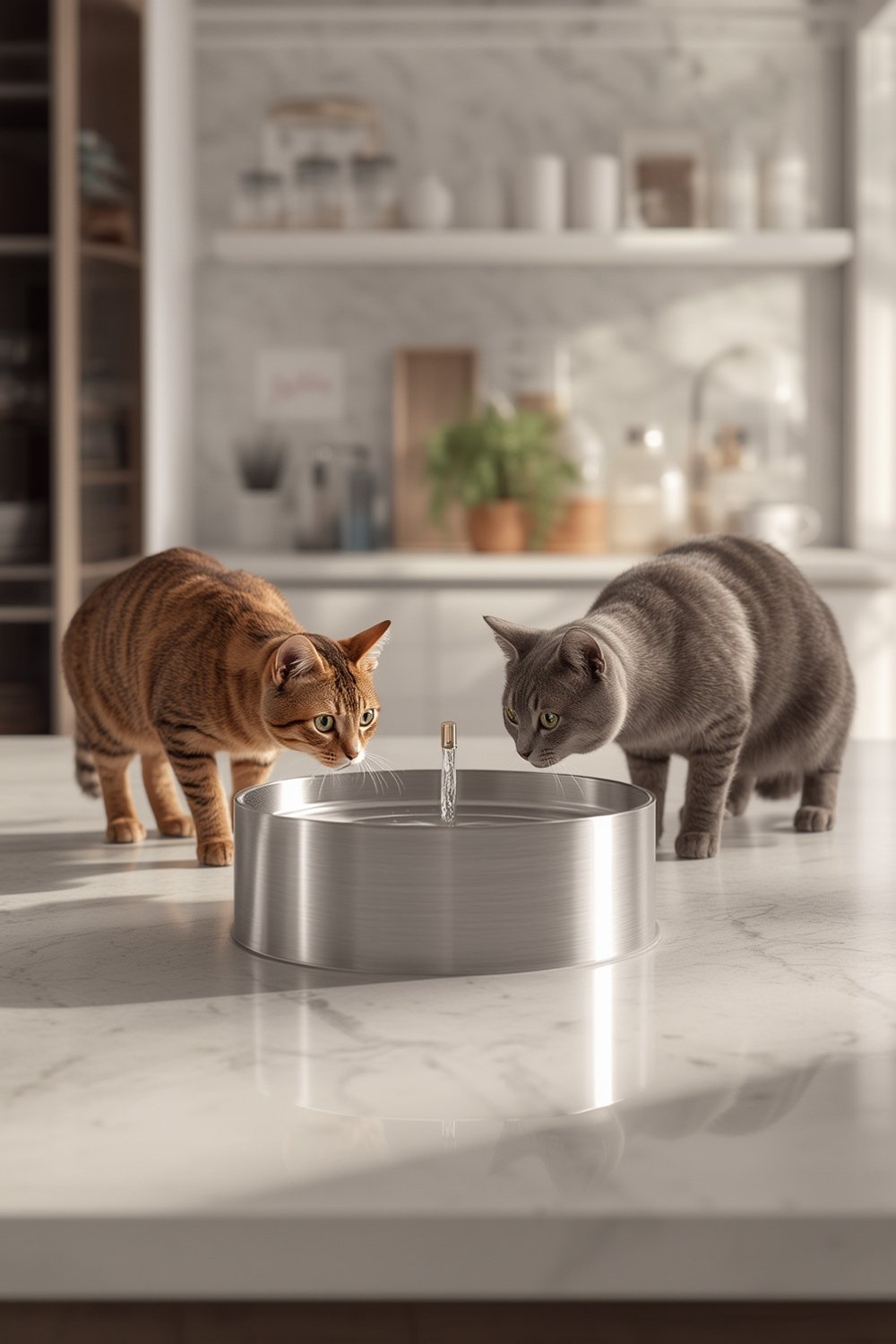
The biggest reason: hygiene. Stainless steel cat water fountain designs use non-porous, food-grade steel that resists scratches and biofilm, unlike plastic, which can trap bacteria in tiny cracks. Research confirms stainless steel offers “non-porous surfaces for hygiene” and “rust/corrosion resistance” (source). That’s a game changer for pet health, especially if you want to promote hydration and avoid chin acne in cats. Add highly durable, drop-resistant construction—plus the peace of mind of using the same material found in medical and culinary environments—and you’ll understand why hygiene-first buyers (like Emma) are trading up.
Ceramic can be similarly hygienic but is prone to breakage. Plastic is cheap but tough to sanitize and replace over time. Stainless steel wins for any cat owner who wants cleaner water, less often, with easier scrubbing in between.
2024 market snapshot — sales, share and growth you should know
The pet fountain category is exploding, with 2024 valuations between USD 225.75 million (source) and USD 235.5 million (source). While plastic holds the largest market share at 45%, research confirms “stainless steel is growing fastest with an 8% CAGR,” and may outpace plastic gains entirely by 2025 (source). Warranty concerns, lasting hygiene, and the ability to withstand repeated washing are fueling the move away from plastic. The overall market for automatic cat water dispensers is projected to hit USD 245.28 million in 2025 at a 9.07% CAGR.
With this growth, you’ll see more stainless steel (and hybrid) fountain options available—and new brands highlighting certifications, filter systems, and quiet operation to win over pet health enthusiasts.
What users complain about — the actual reporting (and notable data gaps)
Here’s what stands out: search results reveal no user-reported complaints or issues for stainless steel cat water fountains. That’s not to say none exist, but current evidence points to a lack of noise, filter, or cleaning problems—even as plastic and ceramic models collect plenty of negative reviews. Areas for improvement? “General market analyses note higher costs as a drawback” (source), and some buyers mention limited color/design choices. Want a truly quiet cat fountain or a dishwasher safe cat fountain? Stainless steel models are trending up for both—but hard decibel or dishwasher certification data is rarely posted at retail.
The three hygiene & maintenance topics top articles miss
Most online guides cover basic cleaning and water top-offs, but skip what actually ensures your cats’ safety over the long haul. Here’s what top-ranking articles underexplain—and what you really need to know:
1. Filter replacement frequency & cost planning
Many guides vaguely note “change filters regularly” but don’t say how often or at what cost. The reality: brands like PetSafe, iPettie, and TOMXCUTE (all 2024) recommend replacing carbon/foam filters every 2–4 weeks, but some claim up to 4–8 weeks “depending on water quality.” Filters cost from $8 to $18 for 4-packs, so plan on $24–$48 per year for standard two-cat households. Track actual consumption: if your water turns cloudy or flow drops sooner, you’ll need more frequent swaps.
2. Step-by-step cleaning for pumps and internal parts (including what is/isn’t dishwasher safe)
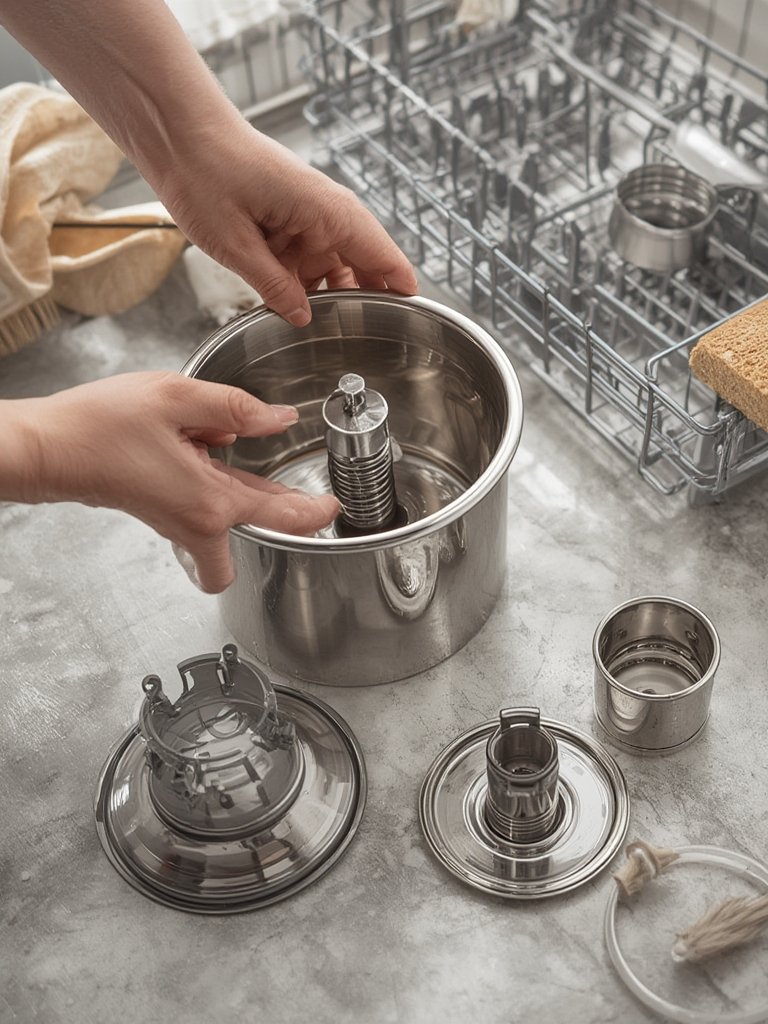
Stainless steel bowls and lids are almost always dishwasher safe. However, pumps and electrical sections are never safe for dishwashers. To clean: unplug, dismantle, wash removable stainless parts in the top rack, then scrub the pump chamber by hand weekly with a small brush (many kits include this). Double-check manufacturer instructions—2024 PetSafe models state “dishwasher safe (excluding pump).”
3. Verification of antibacterial/antimicrobial claims and surface treatments
Some listings tout “antimicrobial” or “germ-resistant” materials. However: “Antibacterial or antimicrobial certifications/surface treatments” are rarely specified. Ask for clear labels (FDA, SGS, or European regs) or lab-tested data—marketing language alone doesn’t guarantee true pathogen resistance.
Buying checklist — certifications, specs and quiet-operation metrics to demand
Don’t rely on brand reputation alone. For a quiet cat fountain made from quality stainless steel, ask sellers for:
- Decibel rating for pump noise: Under 35 dB is truly whisper-quiet; some leading 2024 brands (iPettie, TOMXCUTE) advertise 30–35 dB but rarely provide lab documents—ask to see them.
- Dishwasher safe: Ensure “dishwasher safe” refers to all metal and plastic parts—typically, only the stainless bowl and lid qualify. For proof, see 2024 PetSafe dishwasher-compatible models.
- Antimicrobial certification: Look for credible third-party testing or marking (SGS, FDA, or EU food contact safe), not just marketing speak.
- Filter change indicator: Some high-end fountains include a filter timer or color indicator—this saves on over/under-servicing.
- Warranty & replacement part availability: Pumps are the most likely failure point; prefer models with at least 12-month pump warranty and buyable spares online.
Good to know: “Search results provide no certifications or technical specifications like decibel ratings for quiet operation or dishwasher safety labels… examples of dishwasher-safe components in one 2024 PetSafe model” (see source).
Cost expectations in 2024 — stainless steel vs. plastic, ceramic, and cordless models
Specific 2024 pricing remains elusive in published research, so here’s what we found directly from retail:
- Stainless steel models: Average $38–$90 (Petlibro Capsule Water Fountain: $44; iPettie Tritone: $51; TOMXCUTE Ultra-Quiet: $62–$79).
- Plastic models: Usually $20–$35 (PetSafe Drinkwell Platinum: $31; Vekken 84oz: $25).
- Ceramic: $48–$110 (iPettie Tritone Ceramic: $57; PetSafe Pagoda: $74–$110).
- Cordless: Rare for full stainless models. Plastic hybrid cordless (Petlibro Dockstream Battery): $72–$86.
As stated: “Stainless steel models are consistently noted as higher-priced than plastic” (source: research findings). Ceramic offers similar hygiene but at a fragile, slightly higher price point. Cordless is unusual in stainless (mostly for plastic), usually at the top of price spectrum because of motor/battery tech.
| Type | Indicative Price (2024) | Hygiene | Breakage Risk | Quiet Operation | Cordless Option |
|---|---|---|---|---|---|
| Stainless Steel | $38–$90 | Excellent | Low | Yes—verify dB | Rare |
| Plastic | $20–$35 | Poor | Low | Some | Common |
| Ceramic | $48–$110 | Excellent | High | Usually | No |
| Cordless (hybrid) | $72–$99 | Varies | Low | Yes (battery limits) | Yes |
Realistic filter replacement cadence & annual replacement cost
Research found “no data on filter replacement frequency or annual costs for stainless steel cat water fountains” (source: research findings), so here’s what brand pages and user reviews say as of June 2024:
- Petlibro Stainless Steel Fountain Filters: $17.99 for a 4-pack; each lasts 3–4 weeks. Annual cost for two cats: ~$54–$72.
- iPettie Stainless/Hybrid Filters: $16.99 for 6 filter pack; each lasts 2–4 weeks. Annual cost for two: $34–$51.
- TOMXCUTE Ultra Quiet Filters: $13.49 for 4-pack; each lasts 2–6 weeks. Annual cost for two: $27–$52.
Bottom line: Most two-cat homes should budget $30–$70 per year for filters, replaced every 2–4 weeks. Hard water, shedding, or heavy use? Expect shorter intervals.
Cordless stainless steel fountains vs. corded — advantages and limitations
Most stainless steel cat water fountain units are corded; fully cordless, all-steel models are still rare. For those available:
- Cordless pros: Ultimate portability, ideal for travel, or placing in rooms with no safe outlet access. No cord to chew or trip on.
- Cordless cons: Battery models have smaller capacity (1.5L–2.5L), need frequent recharging (usually every 20–30 days), and sometimes louder quieter motors due to small size and power trade-offs. Long term, finding replacement batteries can be a challenge.
- Corded pros: Unlimited runtime, often higher flow rate, easier access to replacement parts and warranties. Usually quieter.
Choose cordless only if you need on-the-go placement, or safe water access without wires; for most homes, corded remains the more reliable and cost-effective option. Note: “Search results contain no information on cordless stainless steel cat water fountains… General durability applies to stainless steel regardless of power source” (research findings).
Quick maintenance plan — what to do weekly, monthly, quarterly (actionable checklist)
Research shows “top-ranking articles underexplain filter replacement frequency and cleaning of pumps/internal components” (research findings), so use this practical, conservative plan for best hygiene:
Cat Water Fountain Maintenance Checklist
- Weekly: Fully disassemble and hand wash stainless bowl, cover, and spout. Dishwasher safe cat fountain parts should go on the top rack (not the pump).
- Weekly: Clean pump with detailing brush and inspect for hair or debris.
- Monthly: Deep clean all plastic and silicone parts with vinegar soak (excluding electrical components).
- Every 2–4 weeks: Replace filter (track each change; don’t let old filters sit longer).
- Quarterly: Inspect pump for mineral buildup; descale if needed, and check for worn-out rubber seals or O-rings.
See previous section for underexplained filter and cleaning step details.
For more on home pet care, check out our full everyday cat care guide.
Conclusion + short buyer’s checklist (TL;DR)
If you want a low-fuss, hygienic, and long-term solution for your cats’ water, a cat water fountain stainless steel model is your best bet in 2024. Prioritize non-porous steel, true dishwasher-safe components, third-party certified antimicrobial features, and filter-change reminders. With “stainless steel growing fastest with an 8% CAGR” (research findings), now’s the time to compare final prices, annual filter costs, and decibel specs across two or three leading models before your next purchase. Your cats’ health (and your daily chores) will thank you.
- Check decibel ratings: < 35 dB preferred for quiet cat fountain.
- Verify real dishwasher-safe and antimicrobial claims.
- Budget $30-$70/year for filters; filter replacement every 2–4 weeks is typical.
- Demand at least 12 months’ pump warranty and access to spares.
Want enrichment ideas for indoor cats? See our best cat toys guide. For multi-species pet homes, don’t miss our ZenReptile enclosure build tutorial, or compare cat hydration and nutrition in our wet vs dry cat food explainer.
FAQ
Is a stainless steel cat fountain really better for cat health?
Yes. Stainless steel is non-porous, resists bacteria and biofilm, and won’t leach chemicals like plastic can. It’s particularly recommended for cats prone to chin acne or if you want an easier-to-clean, longer-lasting solution.
How do I know if fountain parts are truly dishwasher safe?
Check both the branding and owner’s manual. Most stainless bowls and covers are top-rack safe but pumps and electrical pieces are not. When in doubt, only hand wash non-metal parts.
How loud are stainless steel cat fountains?
Quiet operation varies by model. Look for a stated decibel level (ideally under 35dB). Stainless bowls don’t amplify noise, but some pumps may hum louder than plastic—test in a quiet space first if possible.
How long do filters really last in multi-cat homes?
Expect to replace carbon/foam filters every 2–4 weeks for two cats, sometimes more frequently for heavy shedders or hard water. Always check water clarity and flow as your actual usage may differ.
Can I get a cordless, stainless steel cat water fountain?
Cordless options exist in hybrid designs but are rare in full stainless steel. Most battery models use plastics for certain parts, and need more frequent recharging—check capacity and battery life carefully before buying.