

automatic litter box technology is changing how multi-cat households manage litter, but buying the right unit for two or more cats means cutting through marketing claims and understanding the real evidence on odor, noise, reliability, and costs. Here’s how to make a smart, actionable decision if you want to stop daily scooping and keep your living space (and sleep) undisturbed.
Key Takeaways
- Multi-cat automatic litter box models are only ~22% of today’s market but are growing fast and demand better odor control, larger capacity, and quieter operation.
- Almost no 2026 review or product listing provides quantified stats for noise, ongoing consumables, or true “no smell” performance — you must ask sellers or find independent reviews testing these features.
- To make a smart long-term investment, focus on waste throughput, sealed odor compartments, measured dB output, warranty length, and transparent part/consumable costs.
- Market snapshot — why multi-cat buyers matter now
- Top multi-cat buyer priorities (what to expect and demand)
- Common user pain points (odor, noise, reliability) — what reviews often report or imply
- Features that actually reduce smell — technical checklist
- Noise: what “quiet” claims mean — how to evaluate them
- Reliability & longevity — what warranty and support to expect and ask for
- Price and total cost of ownership for multi-cat models
- 2026 model performance for “no smell” — what we can and cannot verify
- Noise-level evidence mapping — what reviewers should test and record
- Ongoing maintenance & consumables comparison (how to research for 2026 reviews)
- Three critical gaps most 2026 review roundups miss (and how this article will fill them)
- Practical buying checklist for multi-cat households (final CTA)
- Editorial notes for the writer (sources & testing to add)
- FAQs
Market snapshot — why multi-cat buyers matter now
Households with two or more cats represent a rising force in the automatic litter box for multiple cats market. In 2024, global market estimates for self-cleaning litter boxes ranged widely — from USD 559.3 million up to USD 1.94 billion
(PR Newswire). Single-cat-focused models still dominate with about 78 percent market share, but multi-cat units are now driving the fastest growth: expected to increase at 8.9 percent CAGR through 2030
(Grand View Research).
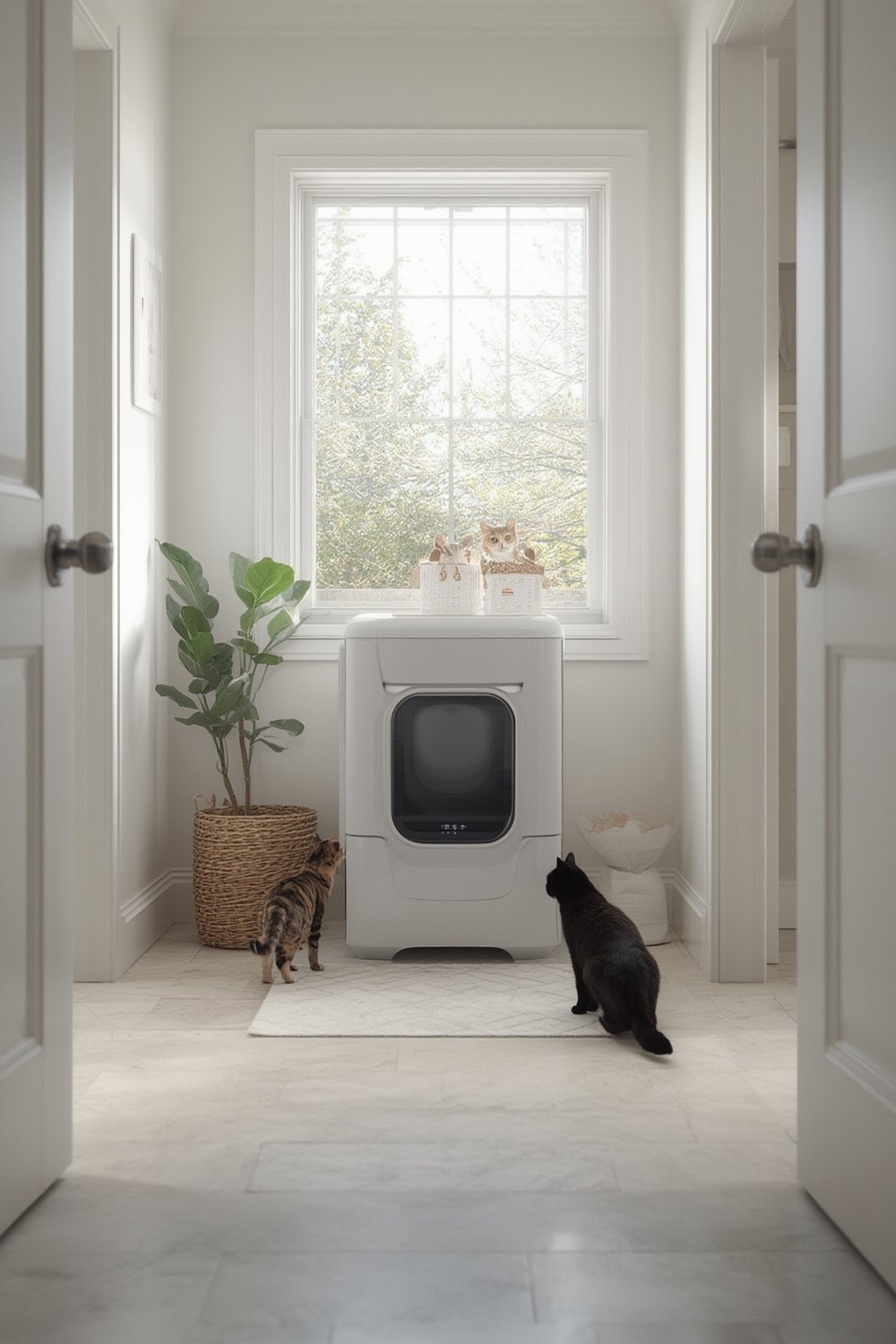
Why does this matter for buyers? Major brands are starting to compete on advanced features, not just core automation. Multi-cat homes like yours are shifting product roadmaps toward better odor control, higher throughput, and quieter cleaning cycles. Expect a wave of models next year promising exactly that — but know there’s still a gap in independently tested data.
Top multi-cat buyer priorities (what to expect and demand)
If you have more than one cat, here’s what actually matters in a self cleaning litter box:
- Proven odor control — Essential for multiple cats. Ask about sealed drawers, real-world performance, and filter systems.
- Large waste capacity/less emptying — Bigger bins = fewer trips to the trash.
- True multi-cat throughput — Can two or three cats use the unit back-to-back without jams or wait times? Some models only support single-cat or low-frequency use.
- Quiet operation — Traditional automatic boxes can be as loud as a vacuum. Look for “QuietSift” or equivalent noise-mitigation technologies.
- Durability — Mechanisms and sensors must withstand frequent cycles.
- Low ongoing costs — Proprietary litter, filter, or liner prices can shift total ownership costs dramatically over three years.
Industry research highlights these as core innovation areas, especially as multi-cat adoption and dual-income, time-starved owners drive demand for upgrades and tech improvements
(IMARC Group).
If you want to reduce your chores and avoid daily scooping, these should be your baseline requirements.
Common user pain points (odor, noise, reliability) — what reviews often report or imply
Most user reviews and forums reveal the same recurring headaches when it comes to automatic litter box ownership — especially for two or more cats:
- Odor persistence — Many buyers expect “automatic” to mean “no smell,” but report ongoing litter room smells. Ineffective seals and weak filters are often to blame.
- Loud cycles — Homeowners and pets are regularly disturbed by units that sound like a coffee grinder or blender. “QuietSift” and similar claims are rarely backed by measured decibel ratings.
- Reliability problems — Sensor errors, litter clumps causing mechanical jams, and unresponsive controls are widely referenced but seldom quantified in public data.
General feedback calls for better odor systems, quieter operation, and more robust waste solutions
(PR Newswire), but owners are left guessing at real-world quantitative metrics. As a result, it pays to check owner forums and review sites for themes — or better, hands-on test data — before you buy.
Features that actually reduce smell — technical checklist
Here’s a technical breakdown of what actually works to create an automatic litter box no smell environment:
- Sealed waste drawers — The tighter the draw seal, the less odor escapes between cycles. Flimsy lids leak odors rapidly.
- active carbon/charcoal filters — Prefer models with replaceable, high-surface-area filters placed directly at exhaust or vent points.
- Dedicated air channels and fans — Units with fans that pull ammonia-rich air through a filter outperform simple passive venting.
- Clumping-litter compatibility — Only clumping (not pellet) litter actually traps urine, limiting vapor escape.
- Fast or event-driven cleaning cycles — Cycles triggered promptly after use mean less time for odors to escape.
- Sealed compartments for waste — Builds a secondary barrier against ammonia and feces odor.
What to verify in specs: Look for claims referencing “sealed waste drawer,” “carbon filtration,” and “active circulation fans.” Models by Litter-Robot, PetSafe, Breville, Smarty Pear, and Petree consistently highlight these innovations
(PR Newswire), but independent, quantified smell ratings are still missing for 2026 releases.
Need better litter recommendations? Check our cat nutrition guide — a clean diet can influence odor load too.
Noise: what “quiet” claims mean — how to evaluate them
You want a quiet automatic litter box that won’t wake your family or startle your cats in the middle of the night. Here’s how to judge “quiet” marketing:
- Request an actual decibel rating (dB) — Ask for dB measured at both one meter and room distance.
- Look for QuietSift or soft-start tech — This gradually ramps motor speed, minimizing jarring startup noise.
- Check real owner or video demonstrations — There’s often a world of difference between claimed and perceived loudness. Search for user-uploaded video reviews before purchasing.
- Understand typical volumes — Normal conversation is 60 dB, dishwashers are 50-60 dB, and vacuums are 70+ dB. Your box should stay under 55 dB if possible.
While many products advertise quiet operation, there’s almost never an independent lab test or published dB figure. If noise is critical for your home, rely on measured reviews or ask the retailer to confirm with a real reading.
For more practical breakthroughs and everyday pet care, see our dog daycare guide.
Reliability & longevity — what warranty and support to expect and ask for
Smart buyers of the best automatic litter box never ignore warranty details or support policies. Here’s what reliable brands typically offer — and what to demand:
- Multi-year warranty (ideally 2+ years) — Covers not just electrical faults, but wear and tear on moving parts.
- Easy access to replacement parts — Check for online parts listings, not “service only” policies.
- Clear return or trial window — At least 30 days of risk-free use is the new standard among premium brands.
- Responsive customer service — Can you reach the support team via chat, phone, or email? Try before you buy.
- Known typical lifespan of components — Ask about average motor/sensor lifetime, if available.
Sadly, most top brands do not post their 2026 warranty terms or proven longevity stats publicly
(PR Newswire). Treat lack of transparency as a red flag, especially if you’re investing over $400+ in a premium model.
If you’re preparing your entire home for multi-pet living, get additional tips from our beginner pets guide.
Price and total cost of ownership for multi-cat models
The upfront price is only the tip of the iceberg for an automatic litter box for multiple cats. Here’s how to calculate real cost over time:
| Cost Type | What to Check | Why It Matters |
|---|---|---|
| Unit Price | MSRP or “final at checkout” | Bulk of your year-1 cost, varies $250–$750 |
| Waste Liners/Trays | Frequency, mandatory/proprietary? | Some models require weekly swaps at $2–$5 each |
| Specialty Litter | Brand-specific, price per month | Proprietary litter can double costs |
| Filter Replacements | How often, price per filter | Active carbon filters may last 30–60 days |
| Repairs/Parts | Motor, sensors, seals | Annual maintenance or surprise breakdowns |
| Electricity | Power draw per cycle, hours/day | Usually modest but can add up for always-on units |
Unfortunately, almost no market report or product page posts brand-by-brand comparison data on ongoing costs
(Stellar Market Research). Ask for this info up front — or look to review blogs and forums that report long-term cost data year by year.
Want to enrich your cats’ daily life to help keep stress (and inappropriate elimination) down? Try our guide to best cat toys for indoor cats.
2026 model performance for “no smell” — what we can and cannot verify
No review or manufacturer has published independently verified “no smell” ratings for 2026 models. Brands like Litter-Robot, PetSafe, Breville, Smarty Pear, and Petree all tout new sealed compartments, advanced filter tech, and health-tracking features for the automatic litter box no smell promise. However, there is no lab-verified data or standardized test available yet (IMARC Group).
- What you can verify: The presence of sealed compartments, replaceable filters, and cleaning speed in the specs.
- What you cannot verify: True in-home “no smell” results for multi-cat households unless provided by a third-party reviewer or hands-on test.
- What to ask sellers: Whether they will provide a no-risk trial or satisfaction guarantee if you’re not happy with odor control.
For urgent care and problem-solving if your cats suddenly avoid the new device, see our cat urgent care guide.
Noise-level evidence mapping — what reviewers should test and record
No independent lab or review site currently publishes standardized noise measurements on automatic litter box reviews 2026.
How to run a standardized noise test:
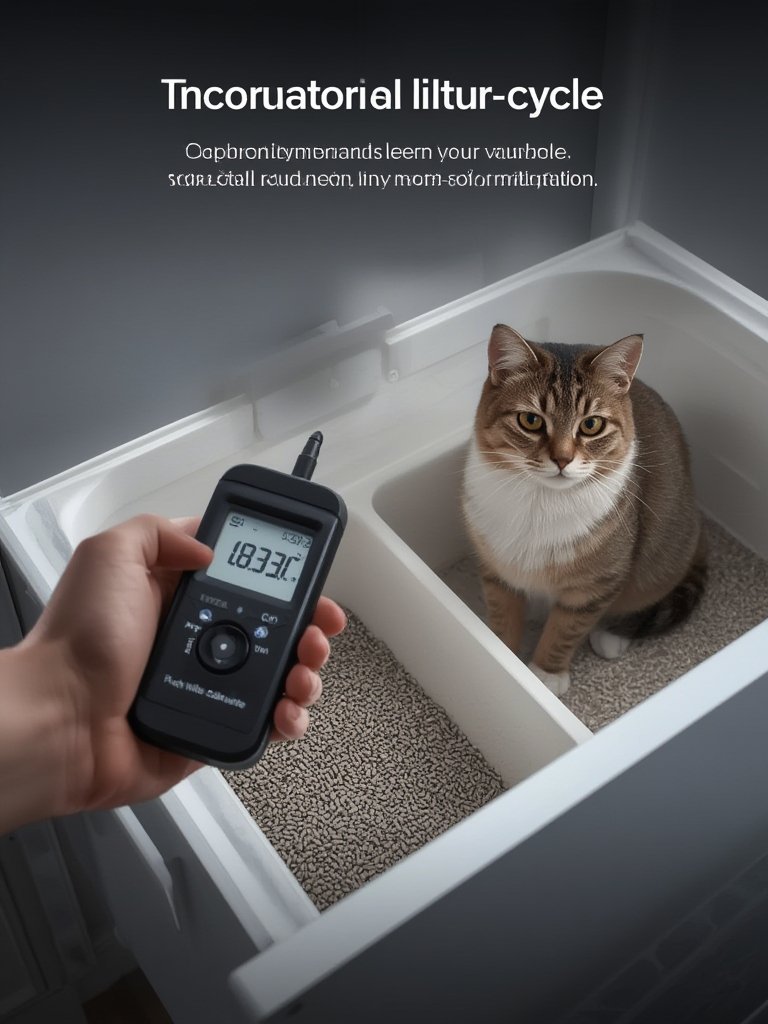
- Set up a phone or dB meter 1 meter (about 3 feet) from the unit at ear height.
- Cycle the box through its main cleaning mode, plus any startup/prep cycles.
- Record minimum/maximum dB for each phase, plus perceived annoyance (can you talk over it? does it disturb sleeping humans or cats?).
- Present dB numbers alongside reference points: conversation, dishwasher, vacuum.
Since there are no available independent decibel results, this is a direct opportunity for reviewers to add unique value to their coverage of the quiet automatic litter box category.
Ongoing maintenance & consumables comparison (how to research for 2026 reviews)
There’s no reliable market or review data showing comparative ongoing costs or real-world maintenance times for self cleaning litter box models. Here’s a ready template for your own evaluation or for what to demand from review roundups:
| Brand/Model | Liner/Tray Replacement | Filter Replacement | Proprietary Litter? | Monthly Consumable Cost | Litter Type Allowed | Parts Availability | Maintenance Time/Week |
|---|---|---|---|---|---|---|---|
| [Brand/Model Here] | [Weekly/Biweekly/Monthly] | [30/60 days] | [Yes/No] | [$X–$Y] | [Clumping/Crystal/etc.] | [Yes/No] | [HH:MM] |
Reviewers: Log consumables and maintenance frequency for a real 12-month test if possible. This is the most-cited blind spot in existing 2026 reviews and can save hundreds for buyers over time.
Three critical gaps most 2026 review roundups miss (and how this article will fill them)
- Quantified owner-reported pain points/reliability stats — Few articles aggregate how many users experience smell, noise, or breakdown issues for 2026 units. Push for user-sourced statistics in reviews.
- Lab-verified decibel and “no smell” ratings for 2026 models — No brands or reviewers consistently run or report these tests. Adding your own makes your coverage more valuable.
- Transparent total cost-of-ownership comparisons — Published upfront prices, plus actual long-term consumables and repair costs, are almost always missing. Demand side-by-side comparisons before buying.
If you’re weighing pet tech vs. more manual care, our guide to custom reptile enclosures shows how to approach pet product purchases for the long haul.
Practical buying checklist for multi-cat households (final CTA)
- Max throughput and waste capacity — Ask for daily cycles and liters or pounds handled per emptying.
- Sealed drawer plus active odor control (carbon fan)
- Measured noise level (dB) or video proof
- Warranty length, parts listing, customer support options
- Ongoing consumable and parts costs, with monthly/annual examples
- Trial/return window if you can’t verify the above
Before buying the best automatic litter box for your multi-cat home, download this checklist and quiz sellers or reviewers for answers to every point. If the data isn’t there, ask for it or move on.
Editorial notes for the writer (sources & testing to add)
- Run hands-on decibel tests at 1 meter and 3 meters for each model, publishing all readings and referencing common household sounds.
- Time hands-on maintenance tasks over at least one month of use, and log all consumable (liner/filter/litter) purchases and costs.
- Screenshot or document manufacturer warranty terms and customer support promises — double-check for 2026 model-year accuracy.
- Aggregate owner complaint and reliability statistics from major pet retailer reviews, owner forums, and social media groups.
- Flag where no primary data exists — transparency is more valuable than guesswork.
Market reports emphasize what’s missing: no model-level pricing, noise ratings, or verified lifespan data
(Technavio). Close these gaps with your own primary research wherever possible.
FAQs
Can one automatic litter box really handle two or more cats?
Yes, some models are designed for multi-cat use, but look for high waste capacity, fast cycling, and confirmation from the manufacturer. “Multi-cat” in the marketing copy is not enough — check user reviews and ask directly about cycle frequency.
What features matter most for controlling odor in a multi-cat home?
Sealed waste drawers, active carbon/charcoal filters, and fast automatic cleaning after each use are essential. For two or more cats, get the largest sealed bin possible.
How can I verify a litter box is actually quiet?
Request an actual measured decibel (dB) rating, watch owner-recorded videos online, or, if possible, test in-store. Quiet models should stay under 55 dB (about dishwasher level) to avoid disturbing people and pets.
What’s the real cost of owning an automatic litter box for multiple cats?
Upfront unit price plus recurring costs: liners/trays, filters, specialty litter (if needed), and potential repairs. Over three years, these can add up to or exceed the original price.
Is there a real “no smell” guarantee with new 2026 models?
No manufacturer yet publishes independently verified “no smell” test results for 2026 models. Look for strong return windows and explicit odor dissatisfaction guarantees instead.