

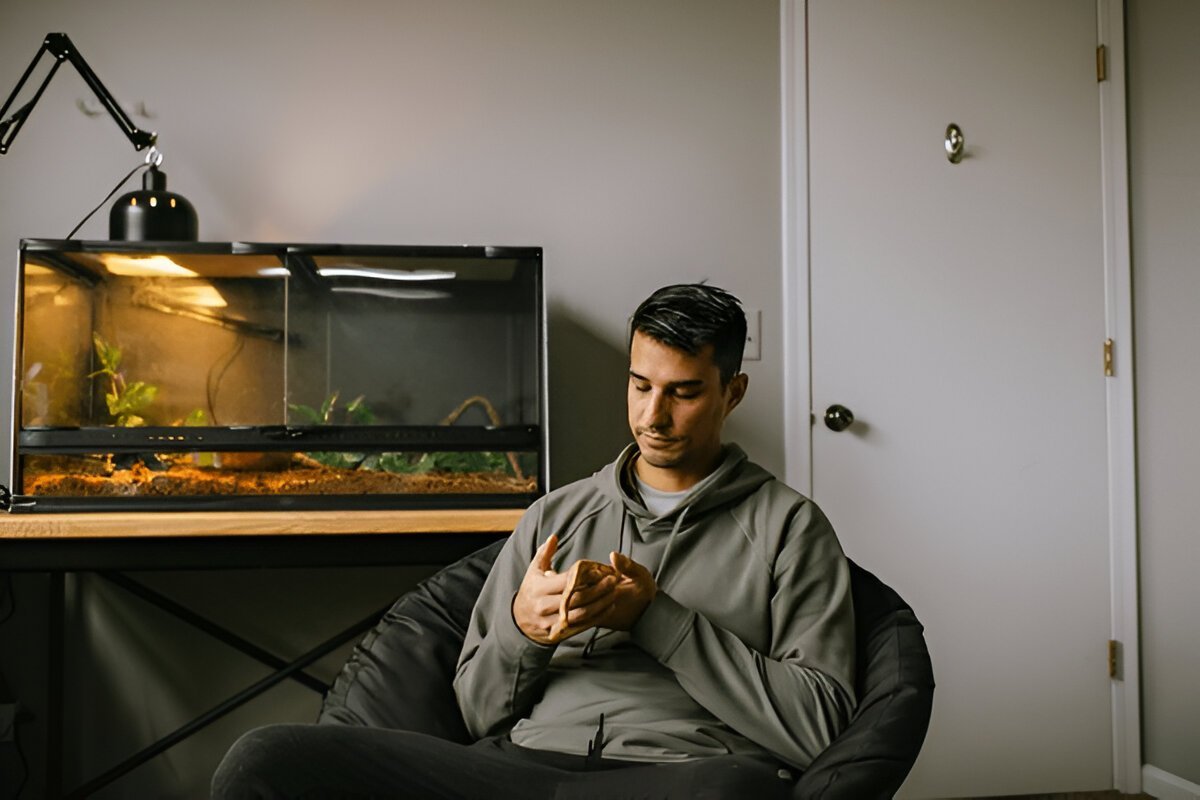
Custom reptile habitats blend function and personality, and the 4x2x2 format offers generous space for medium-to-large species. This article explores creating a calming zen habitat within a 4x2x2 enclosure, covering design principles, species-specific layouts, materials, equipment, and long-term care. Learn practical plans and tips to build a safe, attractive, and low-stress home for your reptile.
Why customize your reptile habitat
Custom reptile habitats especially the highly popular reptile habitats 4x2x2—offer distinct advantages for keepers who value animal welfare and the serene aesthetics of zen habitats. Choosing to customize lets you prioritize both the unique needs of your reptile and the overall look and feeling of your home, moving beyond standard glass tanks that often fall short.
Every reptile species has specialized biological and behavioral requirements which an off-the-shelf tank may not respect. Customization provides freedom to tailor features such as thermoregulation zones, secure hides, vertical or horizontal space for climbing, burrowing substrate depth, and intentional enrichment. For example, a 4x2x2 enclosure is ideal for:
- Bearded dragons—ample space for active foraging and basking between 95–110°F with a solid cool side
- Blue-tongue skinks—room for terrestrial roaming, creating humidity pockets, and multiple hides
- Medium monitors—enough area for climbing ledges and deep substrate for digging
- Arboreal/terrestrial mixes—the vertical depth to meet dual lifestyle needs within a single footprint
Meeting species-specific targets is easier with a custom build:
- Thermal gradients: Basking spot 95–110°F; cool area 75–85°F
- Humidity: 30–40% (arid), 60–80% (tropical)
- Minimum hides: 2–4, depending on security needs
However, customizing does present trade-offs. Upfront costs for materials and tools are typically higher than basic tanks. Planning and assembly take time and learning. Maintenance may grow more complex, especially with lush fixtures or advanced lighting, and careful material selection is necessary to avoid harmful chemicals or unsafe off-gassing. These factors are manageable by careful project planning, using proven animal-safe materials, and starting with clear species care goals.
The unique value of a custom build is the ability to create not just a safe haven but a visually harmonious habitat that blends seamlessly with your living environment. This is where design aesthetics and user experience—the hallmarks of modern zen habitats—become equally critical for long-term animal health and keeper fulfillment, as explored in the next chapter.
Design principles for a zen reptile habitat
- Zen terrarium design revolves around minimalism, where each element serves a clear function or aesthetic role. Negative space is crucial: empty or low-decorated zones allow reptiles ample movement and visibility, and also contribute to a calming reptile habitat for both animal and keeper. Use subtle, layered arrangements—stack smooth natural textures like stone and sealed cork, and arrange elements to create depth from front-to-back. Incorporate a calm color palette (grays, aged wood, slate, sand, muted greens), avoiding artificial brights. The design should feature one main focal point (such as a sculptural driftwood arch, or single outcrop of stone), with plant groupings providing gentle pattern and movement.
- Balancing aesthetics and function is key for a minimalist reptile enclosure. Equipment—cords, fixtures, sensors—should be concealed behind bamboo screens, recessed panels, or naturalistic foam backgrounds but remain accessible for adjustment. Front-vent airflow keeps the substrate dry and supports thermal gradients:
- Use left-right or diagonal heating layouts, but use the full 4x2x2 depth by clustering warmth and hides at different heights and locations. For example, place a shallow basking zone in one front corner, and a cool shadowed hide in the opposite rear, with a basking stone on a gentle slope as a central anchor.
- Practical layouts include vertical cork tubes or low rock stacks on one wall, a single large branch bridging mid-tank for climbing, and sparse, broad-leafed plants in two to three groups (live or artificial, depending on species needs).
- Recommended zen materials and finishes:
- River stones, slate, granite (edges smoothed for safety)
- Sealed cork bark (baked and sealed with inert varnish)
- Epoxy-resin or foam faux rocks, sealed with reptile-safe coatings
- Bamboo strips or low-profile bamboo hides
- Minimal, solid resin water bowls
Avoid: untreated pine (sap toxicity), plywood with formaldehyde, paints not labeled non-toxic after curing, and any decor with loose gravel or ingestible pieces.
- Lighting and color guidance:
- Use warm white LED basking (3000–4000K) with natural shadow gradients.
- Conceal ambient LED strips above a ceiling ledge for a soft, diffuse effect (no direct glare).
- UVB tubes should be hidden behind a low-profile canopy, positioned to provide full gradient but without excessive shadowing or blocking.
- Background color: pale gray or beige, never stark white or dark black—these help reduce stress for most species and visually expand the space.
Guidelines:
- Desert diurnal: 8–12% UVB, lamp 12–16″ above basking zone
- General tropical: 5–7% UVB, lamp 8–12″ above
- Lighting: 3200–4500K for a calming, natural tone
- SEO-focused headings and keywords for this section:
- minimalist reptile enclosure
- zen terrarium
- calming reptile habitat
Internal linking suggestion: For practical applications, see the next chapter on species-specific 4x2x2 layouts.
Optimizing a 4x2x2 habitat for common species
- Bearded Dragons and Diurnal Ground Lizards: A 4x2x2 enclosure excels for these active, basking lizards. Use a 100W-150W halogen basking lamp in a dome fixture mounted 12-16″ above a basking platform. Place a broad, flat basking stone offset to one side to create a top basking temperature of 105–110°F with a cool zone at ~75°F. Ensure the lamp’s UVB tube (10-12% output, 36-48” length) runs nearly the entire width, mounted 12″ above the main activity area. For substrate, use 2–3” of packed topsoil/sand blend for digging and hygiene. One main hide on the cool side, a secondary hide near the warm end, and a shallow water dish (wide, heavy, easy to clean) suffice. Humidity should stay 30–40%; fans aren’t needed, but avoid overwatering. A small feeding station with a lip prevents substrate ingestion.
- Checklist:
- Thermal gradient: 110°F basking–75°F cool
- Humidity range: 30–40%
- UVB: Required (10-12% T5)
- Substrate: Topsoil/sand blend, 2-3”
- Hides: 2
- Water: Shallow, stable bowl
- Enrichment: Branches, basking rocks, digging zone
- Checklist:
- Blue-Tongue Skink & Medium Skinks: Prioritize burrowing by laying 4–5” of cypress mulch or topsoil/coco fiber mix. Place a large moist hide (minimum 12″x12″x6″ box with access hole) on the cool end, filled with damp sphagnum or coconut fiber to support shedding and thermoregulation. Use an arcadia D3 6% UVB or similar, spaced at 10–15”. Target a thermal gradient of 95°F basking to 75°F cool, with ambient humidity of 40–60% (raise to 70% for shedding, but only inside moist hide). Add leaf litter and rocks for seasonal enrichment stimulation.
- Checklist:
- Thermal gradient: 95–75°F
- Humidity range: 40–60% (up to 70% in the moist hide)
- UVB: Medium (6–8%)
- Substrate: 4–5” mulch/coco/soil blend
- Hides: 2+ (include moist hide)
- Water: Heavy, tip-proof dish
- Enrichment: Leaf litter, logs, bark pieces
- Checklist:
- Ball Python & Medium Snakes: Use a primarily horizontal layout with multiple cork rounds or plastic hides on both warm (88–92°F) and cool (76–80°F) sides. Insert a substrate depth of 2–3” aspen or coco husk (note: cypress for higher humidity species). Mist above 55% humidity for shedding. Include a sturdy water bowl, 10–12” diameter, placed centrally or on the cool end, sunk in substrate to anchor it. For climbing enrichment, add a few stout, anchored branches.
- Checklist:
- Thermal gradient: 88–80°F
- Humidity range: 50–70%
- UVB: Not required, low-level optional
- Substrate: Aspen/coco/cypress, 2–3”
- Hides: 2 minimum, both ends
- Water: Large, heavy bowl
- Enrichment: Branches, leaf piles
- Checklist:
- Arboreal or Semi-Arboreal Species: Maximize the 2ft height with securely anchored, horizontal and diagonal branches spaced 6–12” apart to allow easy climbing and faciliate a vertical thermal gradient. Add multiple anchor points and weight-test branches (supporting at least 2x the lizard’s weight). Use layered, sturdy live or faux plants for shade and security, placing larger foliage at mid-level. Install a UVB tube and basking spot at canopy height; create observable gradients along the vertical space (95°F basking, down to 75°F floor). Consider a deep substrate for burrowing options.
- Checklist:
- Thermal gradient: 95°F top–75°F floor
- Humidity range: Species-dependent (typ. 50–80%)
- UVB: Required (10–12%)
- Substrate: 3” coco/soil/mulch
- Hides: Canopy and underbrush
- Water: Misting/drip, or dish for non-Chamaeleonids
- Enrichment: Branches, living plants, climbing wall
- Checklist:
- Compatibility warning: Never co-house conflicting species or unfamiliar individuals in a single 4x2x2 reptile habitat. Most thrive solitarily; even similar habits often yield aggression or stress. For more on enclosure equipment and sourcing, see the following materials & equipment chapter.
Materials equipment and layout plans for a 4x2x2 build
Building a 4x2x2 zen reptile habitat starts with a structurally sound frame. For maximal safety and aesthetics, aluminum and PVC panels excel for low-maintenance builds, but thick, sealed plywood with marine epoxy can offer warmth and customizable finishes. Always seal all interior wood, and opt for silicone or solvent-free caulks. Front-opening glass/acrylic doors support easier access and daily interaction but need strong latches. Top-only access keeps costs down and better retains humidity but complicates interior work. For proper ventilation, target 8-12% vent area split across low (intake) and high (exhaust) placements for crossflow while minimizing heat loss.
- Substrate: Match depth/type to species: For desert dwellers, mix 60% washed play sand with 40% clay/sandy soil at 4″ depth. Skinks thrive in 4-6″ of coco-coir, cypress mulch, and 10% sand. Planted zen setups excel with 1″ LECA, mesh barrier, 4-6″ bioactive soil (loam, sphagnum, sand, charcoal at 60/20/10/10 ratio), and a top layer of leaf litter.
- Heating & Lighting: Use a dome fixture with a 75-120W halogen basking bulb and digital thermostat, placing the probe at basking surface level. For nocturnal warmth, add a 60-100W ceramic emitter with a wire guard. Zen ambience benefits from dimmable LED strips along the ceiling. UVB needs: for ground dwellers use 10-12% T5 UVB at 12″ above basking, for climbers 6% at canopy. Always install a mesh guard for safety.
- Water & Humidity: Low-profile corner water bowls work for dry habitats. For tropical setups, choose a 0.5-1 gal hidden pond or external reservoir connected to a misting system (2 nozzles, timer set for brief sprays). A small ultrasonic fogger on a digital controller maintains zen humidity without flooding.
- Background & Decor: Layer cork panels or sculpt foam/epoxy faux rock vertically, anchor driftwood with stainless brackets, and add vertical planters or pots for golden pothos or sansevieria. Place magnetic or rock cave hides on both temperature gradients. Minimalist layouts favor removable fixtures for swift cleaning.
Sample Layout – Desert/Diurnal:
- Hot side: Basking lamp (1) above slate tile (2), low hide (3) on warm substrate.
- Cool side: Vent panel (4), cave hide (5), water bowl (6).
- Décor: Scattered flat stones, sparse driftwood.
Sample Layout – Zen Planted/Tropical:
- Back: Faux rock background (1), vertical driftwood (2), pockets for live plants (3).
- Warm side: Ceramic heater (4) overhead, moist hide (5) below.
- Cool side: Mist/fog nozzle (6), bioactive thermometer/hygrometer (7), leaf litter zone (8).
Shopping Checklist:
- Sealed enclosure kit or custom-cut panels (aluminum/PVC/wood + glass)
- 2” mesh vents with screens, locks/latches
- Substrate (sand, soil, coir, mulch, LECA)
- Basking lamp, ceramic emitter, thermostats
- LED strip, UVB fixture, safety guards
- Water dish/fogger/misting system
- Cork/faux rock, hides, climbing branches
- Plant-friendly soil, safe live plants
Smart choices in substrates and decor streamline spot-cleaning, prevent mold buildup, and improve animal wellbeing over years—directly supporting the low-maintenance, long-life goals discussed in the upcoming maintenance chapter.
Maintenance monitoring and long term care
- Daily Checklist
- Check and log temperature and humidity readings at both warm and cool ends. Minor fluctuations are natural; significant changes may indicate equipment issues or the need for microclimate adjustments.
- Spot-clean waste and remove uneaten food. Top up water and mist if needed (for tropical enclosures).
- Observe animal behavior for activity level, appetite, and overall appearance. Early intervention is easier than correcting established problems.
- Weekly Checklist
- Inspect all substrates for mold, compaction, or excess moisture; gently fluff or mix top layers as needed to maintain aeration in deep or bioactive beds.
- Care for live plants: prune dead leaves, check for pests, and water or fertilize appropriately. Minimalist Zen layouts benefit from subtle plant upkeep to preserve their calming look.
- Wipe down glass and decor hot spots where buildup occurs—but avoid harsh cleaners that might harm sensitive microfauna.
- Monthly Checklist
- Test thermostat function by cycling settings and using an independent thermometer to ensure accuracy.
- Examine heating and lighting fixtures for wear, discoloration, or loose parts. Check UVB lamp hours; most brands recommend replacement at 6-12 months (or as indicated by a UV index meter).
- Clean water filters, tubing, and reservoirs in aquatic or misting systems to prevent buildup and ensure optimal operation.
- Sanitation & Biosecurity
- Use diluted chlorhexidine or veterinary-safe cleaners for deep cleans. On bioactive setups, gently remove surface debris while retaining leaf litter and microfauna layers.
- Quarantine new animals and monitor for parasites; establish protocols for handling and treating infestations to protect your habitat’s balance.
- Behavioral and Welfare Monitoring
- Look for signs of stress (persistent hiding, glass-surfing, aggression), reduced appetite, or shedding issues. These may indicate improper microclimates or psychological stressors.
- Reshape hides, enrich with new climbing/perching opportunities, or shield one end for extra privacy to alleviate issues.
- Troubleshooting Common 4x2x2 Issues
- Uneven temperatures: Verify lamp placement and cross-ventilation patterns; use baffles if needed.
- Humidity swings: Adjust misting duration or reservoir size, and check seals or substrate depth for proper retention.
- Substrate compaction or plant decline: Replace or aerate substrate; rotate plant species to more resilient types fitting your climate zone.
- Long-term Upgrade Planning
- Update the 4x2x2 layout as juveniles mature, adding new hides or branches; monitor animal size and consider transitioning to a larger enclosure if outgrowing the current space.
- Use enduring décor and naturalistic features for a Zen effect that evolves gracefully over years, reducing the need for frequent full-scale redesigns.
- By developing ongoing routines and a proactive monitoring plan, your custom Zen 4x2x2 habitat will remain both safe and beautiful for its resident. For more design strategies and tailored species advice, revisit our previous chapters before gathering materials and mapping out your project plan.
Conclusions
Thoughtful custom design turns a 4x2x2 enclosure into a zen habitat that meets species needs while enhancing well-being. By applying the design principles, proper equipment, and maintenance routines outlined here you can create a safe, low-stress home tailored to your reptile. Start with a clear plan, prioritize thermal gradients and enrichment, and adapt layouts as your animal grows for lasting success.
see more product reviews HERE

Amazon and the Amazon logo are trademarks of Amazon.com, Inc. or its affiliates.