

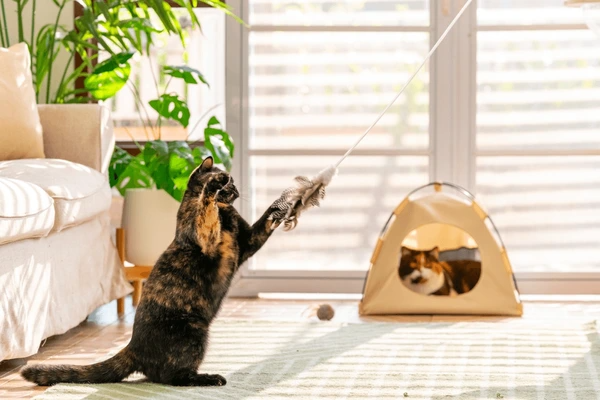
Indoor cats need daily mental and physical stimulation to stay healthy and happy. This article explores the best cat toys for indoor cats and the top interactive options that promote exercise, reduce boredom, and prevent behavior problems. You will learn how to choose safe toys, match play to your cat’s personality, and set up routines that make indoor life enriching.
Why indoor enrichment matters for cats
For cats living exclusively indoors, daily life contrasts sharply with the stimulating variety of the outdoors. Unlike their outdoor counterparts that hunt, climb, explore, and interact freely, indoor cats have limited access to the sights, scents, and challenges that keep mind and body naturally engaged. While this lifestyle protects felines from many hazards, it also means owners must actively provide indoor cat enrichment to ensure long-term health and happiness.
The lack of environmental stimulation in indoor settings can lead to a range of problems. Without regular outlets for energy and curiosity, cats often develop behavioral and health issues. Obesity tops the list, as reduced movement and easy food access mean calories build up fast. Understimulated cats may also experience stress, which can show through destructive scratching of furniture, overgrooming (sometimes leading to bald spots), and even withdrawal or aggression.
Incorporating the best cat toys for indoor cats into daily routines plays a vital role in mitigating these problems. Toys and interactive play allow cats to express natural predatory behaviors—stalking, pouncing, and chasing—essential for both mental and physical well-being. Using interactive cat toys for indoor cats, such as feather wands, laser toys, or motorized “prey,” replicates the fun and challenge of real hunting, which can be especially rewarding for higher-energy or curious personalities. Puzzle feeders challenge a cat’s mind, encouraging problem solving and slowing eating.
Regular play not only aids in maintaining mobility and muscle tone—especially crucial for less active indoor cats—but also offers a meaningful way to strengthen the bond between cat and owner. Engagement and positive interaction can help cats feel more secure and reduce stress, creating a happier indoor environment.
Enrichment needs change over a cat’s lifespan. Kittens require frequent, high-energy play to burn off excess energy and foster development. Active adult cats thrive on complex, challenging toys. Senior cats or those with mobility issues still need stimulation, though softer toys and slower-paced games are best.
- Healthy weight management and reduced risk of obesity
- Lower stress and anxiety levels
- Minimized destructive behaviors
- Improved mobility and muscle tone
- Increased confidence and curiosity
- Stronger cat-owner relationships
Types of toys and how each supports cat behavior
Feather wands and chase toys appeal to a cat’s innate hunting instincts, simulating the movement of prey and encouraging leaping, pouncing, and stalking. They offer face-to-face interaction, making them ideal interactive cat toys for indoor cats and an easy way for owners to engage in daily play sessions.
- Pros: Great for kittens and energetic adults; strengthens cat-owner bond; encourages exercise; safe under supervision.
- Cons: Can fray or break with rough use; always supervise to prevent swallowing parts; may bore solitary or low-energy cats with repeated use.
Younger and high-energy cats are especially responsive, but rotation is important to prevent overfamiliarity.
Laser pointers deliver endless chasing fun and tap into quick hunting reflexes. They’re excellent for exercise but must be ended with a tangible toy to avoid frustration.
- Pros: Ideal for high-drive adults and agile seniors; allows extended, energetic play in small spaces; no setup required.
- Cons: No physical satisfaction if overused; can cause compulsive chasing if misused; never shine directly into eyes.
Best for quick, stimulating bursts—older cats may appreciate shorter, less intense sessions.
Motorized toys and automatic mice mimic unpredictable prey motion. These interactive cat toys for indoor cats are excellent for busy owners, delivering entertainment when you’re away.
- Pros: Provide autonomous play; suit most ages; appeal to natural curiosity.
- Cons: May be too intense for timid cats; battery changes required; parts can break if cats are rough.
Curious, independent cats and bored young adults often find these toys irresistible.
Puzzle feeders and treat-dispensing toys mentally stimulate while rewarding with food. These “puzzle feeders” slow eating and encourage problem-solving.
- Pros: Great for intelligent cats and food-motivated seniors; fights boredom; aids in weight control.
- Cons: May frustrate easily discouraged cats; need regular cleaning.
Ideal for calm thinkers and cats left alone during work hours; rotate various designs to keep interest high.
Catnip and scent toys harness the allure of olfactory enrichment. Many cats love batting and cuddling these toys, experiencing short bursts of euphoria.
- Pros: Excellent for enrichment and comforting anxious cats; stimulates inactive personalities.
- Cons: Not all cats respond; scent may fade; overuse can dull effect.
Perfect for lazy adults and anxious personalities; refresh or swap out toys regularly.
Balls and rolling toys offer chase and batting opportunities, requiring little space and user effort.
- Pros: Durable, simple, and inexpensive; great for solo play.
- Cons: Some cats lose interest quickly; can get stuck under furniture.
Kittens and playful adults benefit most; limit to a few at a time to avoid clutter and keep play dynamic.
Scratching/play furniture combines exercise, claw maintenance, and play in one. Towers, cardboard scratchers with balls, and tunnels cater to climbers, scratchers, and hiders.
- Pros: Multi-functional; supports natural behaviors; helps manage stress; accommodates group play.
- Cons: Can be large and expensive; requires space; some cats prefer specific textures.
Ideal for multicat homes, climbers, and cats who need outlets for scratching; rotate placement and add attachable toys for novelty.
- High-energy kittens: Opt for chase toys, feather wands, rolling balls
- Shy or senior cats: Introduce puzzle feeders, scent toys, and gentle lasers
- Clever cats: Rotate puzzle feeders and motorized toys
- Multi-cat households: Choose climbing/scratching furniture and interactive toys
- Food-motivated cats: Use treat-dispensing balls and slow feeders
- For all cats: Rotate toys every few days; supervise as needed to maintain engagement and safety
Top interactive toys and how to choose the best models
Selecting the best cat toys for indoor cats, particularly interactive options, involves careful consideration of specific criteria to ensure safety, stimulation, and longevity. When shopping for interactive cat toys for indoor cats, focus on the following:
- Safety and Non-Toxic Materials: Choose toys made from BPA-free plastics, food-grade silicone, or natural fibers. Avoid items with loose parts that could be swallowed.
- Battery Life and Power: Automatic and app-enabled toys should have reliable power sources, ideally with long-lasting rechargeable options to keep play sessions consistent.
- Noise Level: Select quiet-operating toys to prevent startling or stressing sensitive cats.
- Durability: Indoor cats can be vigorous players. Look for reinforced stitching in plush toys or robust plastics in electronic toys.
- Ease of Cleaning: Toys that allow for easy disassembly or wipes down quickly will keep germs and odors at bay.
- Hunting Stimulation: The best cat toys for indoor cats mimic prey movements, engaging their natural instincts and providing both mental and physical exercise.
Popular categories include:
- Automatic Laser Toys: Set-and-forget devices that shoot random lasers for chase games.
- Pros: Hands-free, encourages active play, randomness maintains interest.
- Cons: Some models have limited angles, battery-operated only, avoid direct eye contact.
- Buying tips: Check run time, coverage area, and programmable features in product specs and reviews. Quality models prioritize safety shut-offs to avoid eye exposure.
- Motorized Mice: Battery-powered or rechargeable mice that scurry, wiggle, or spin.
- Pros: Imitates prey, encourages chasing and pouncing, interactive solo play.
- Cons: Can be noisy, lightweight options may get stuck under furniture.
- Buying tips: Look for adjustable speed, obstacle avoidance, and silent motors; read about durability and battery performance in user reviews.
- App-Enabled Smart Toys: Bluetooth or WiFi toys controlled by a smartphone app.
- Pros: Highly customizable play, allows remote interaction, tracks activity.
- Cons: More expensive, may require firmware updates, some connectivity issues.
- Buying tips: Confirm app compatibility, software support, and if replacement parts are available. Check user feedback for connectivity and battery reliability.
- Treat-Dispensing Puzzle Balls: Balls or cubes that release treats as they are batted around.
- Pros: Engages hunting, slows feeding, stimulates problem-solving.
- Cons: Needs supervision for some cats, treats can jam in poor designs.
- Buying tips: Review size, treat size compatibility, and ease of cleaning in user reviews. Prefer models with adjustable difficulty.
- Motion-Activated Teaser Wands: Floor-mounted or freestanding toys with feathers or ribbons that mimic prey.
- Pros: Entices interactive leaping and batting, variety of attachments, hands-free modes.
- Cons: Attachment wear over time, some require manual reset.
- Buying tips: Check for replacement attachments and sturdy mounting in reviews. Observe real user videos for actual cat interest and durability.
Always verify current model names and read up-to-date user reviews on trusted retailers’ sites. Check manufacturer websites for technical specifications and search for safety recalls on consumer safety databases or veterinary sites, ensuring you select truly safe and stimulating interactive cat toys for indoor cats.
Safety maintenance and hygiene for cat toys
Toy safety for indoor cats starts with careful selection. Always choose toys labeled non-toxic, especially for chewers. Avoid unknown plastics, cheap rubber, or toys that have glued-on decorations, painted surfaces, or artificial feathers that can flake or splinter. Inspect toys for removable eyes, bells, or any small attachments that could become swallowing or choking hazards. Cut away loose strings or ribbons before giving new toys to your cat, especially on teaser wands or balls.
Always inspect toys before each play session. If you notice missing parts, sharp edges, frayed strings, punctures, or weakening seams, remove the toy immediately. For interactive cat toys for indoor cats with batteries or motors, ensure battery covers screw shut tightly and are checked monthly for signs of leakage. Never leave electronic toys operating unattended—cats can chew wires or accidentally access batteries.
Laser pointers should never be shined in your cat’s eyes. Use them only as a moving target on surfaces, and always finish play by letting your cat “catch” a physical toy to avoid frustration-driven behaviors.
Cleaning cat toys regularly is crucial for your cat’s health:
- Fabric/plush toys: Spot clean weekly with pet-safe, scentless soap and warm water. Wash thoroughly in a pillowcase (gentle cycle, no fabric softener) monthly or when dirty. Air dry completely before reuse.
- Rubber/plastic toys: Soak in 1:20 vinegar and water solution for 15 minutes, scrub clean, rinse well, and dry fully.
- Electronic/motorized toys: Wipe with a damp cloth; never submerge. Disinfect exterior surfaces with pet-safe wipes but keep battery compartments dry.
Rotate toys weekly—store half and exchange to keep novelty high, and replace worn toys every 1–3 months (soft toys), or when damaged. Mark “toy checks” on your calendar to ensure consistent maintenance.
Emergency checklist if a cat swallows a toy or is injured:
- Stay calm; remove other cats and hazards.
- Do not induce vomiting without veterinary advice.
- Check mouth and throat for visible obstructions (do not force open).
- Contact your veterinarian or emergency animal hospital right away.
- Bring toy remnants to the vet for identification.
- Monitor for choking, gagging, pawing at face, lack of appetite, vomiting, or lethargy.
Designing play routines and advanced enrichment strategies
Building strong play routines is essential to enrich your indoor cat’s life, support healthy exercise, and minimize behavior issues. Daily and weekly play schedules should be age-appropriate, challenging, and structured around your cat’s natural energy rhythms—most cats are most playful in the early morning and evening.
Session frequency and length should vary by age:
- Kittens: Extremely playful and curious, kittens do best with 4–6 short play sessions per day, each lasting 5–10 minutes.
- Adults: Benefit from 2–3 interactive sessions daily, 10–20 minutes each, ideally split between morning and evening with a quick midday break if possible.
- Seniors: Still benefit from play but may tire quickly; offer 2 short sessions (5–10 minutes) at gentle intensity each day, tailored to their mobility.
Sample Play Routine:
- Morning: Feather wand or chase toy—mimic hunting, 10–15 min.
- Midday: Food puzzle or treat-dispensing ball for solo play (5 min).
- Evening: Laser pointer or interactive electronic toy—allow “catch” at the end to prevent frustration, 10–20 min.
Advanced enrichment strategies keep your cat engaged mentally and physically:
- Food-dispensing toys: Rotate puzzle feeders or snuffle mats at meal times to boost problem-solving and slow eating.
- Scent trails: Dab a cotton ball with catnip, silver vine, or a safe herbal sachet and create trails to encourage foraging instincts.
- Multi-cat households: Supervise play to avoid competition, offering parallel play stations and plenty of toys to reduce resource guarding.
- Interactive training: Use clicker training for games like “high five,” targeting, or leash training, which strengthen your bond and provide mental exercise.
- DIY Toy Ideas: Paper bags (handles removed), cardboard boxes, toilet paper rolls, and bundled socks can make excellent, safe enrichment objects.
Troubleshooting Play Problems:
- Lack of interest: Rotate toys regularly; experiment with new textures, sounds, and catnip/silver vine; switch up play times.
- Overstimulation: Watch for tail lashing or biting. If it happens, pause play and allow your cat to regroup.
- Aggression during play: Always use wand-type toys to maintain safe distance; stop play if your cat attacks hands or feet.
- Buying Checklist:
- Sturdy construction & safe materials (no loose parts)
- Variety of interactive and solo play options
- Enrichment value (puzzles, textures, movement)
- Age and energy level suitability
- Easy to clean and maintain
- Size and design appropriate for your indoor space
Conclusions
Choosing the right toys and interactive play strategies keeps indoor cats healthier, happier, and more relaxed. Prioritize safety, variety, and regular play sessions, and rotate toys to maintain interest. Combine simple toys with interactive or automatic options and puzzle feeders for mental stimulation. With the right selection and routines you can reduce problem behaviors and improve your cat’s wellbeing.